


Discover the Benefits of Thai Food: Flavor, Health

TL;DR:
Authentic Thai cuisine is rich in fresh herbs, lean proteins, and plant-based ingredients promoting health.
A plant-forward Thai diet improves BMI, blood pressure, cholesterol, and gut health within 12 weeks.
Smart menu choices, including requesting less sodium and adding vegetables, enhance nutritional benefits.
Most people assume that food this flavorful must come at a health cost. Thai cuisine quietly breaks that rule. Packed with fresh herbs, lean proteins, and plant-forward ingredients, authentic Thai dishes offer a nutritional profile that surprises even seasoned health enthusiasts. A randomized trial found that a plant-forward Thai diet improved BMI, blood pressure, cholesterol, and gut microbiome in just 12 weeks. This article walks you through the science behind Thai food’s health benefits, shows you how to order smart at your favorite Thai restaurant, and helps you understand why this cuisine is one of the most rewarding choices you can make for your long-term well-being.
Table of Contents
Key Takeaways
Point | Details |
Plant-forward power | Thai cuisine’s plant-based focus is linked to improved blood pressure, cholesterol, and gut health. |
Spices deliver real benefits | Traditional Thai herbs and spices have proven anti-inflammatory and antioxidant properties. |
Balance supports healthy eating | Flavor harmony in Thai food can boost digestion, help you feel satisfied, and curb overeating. |
Smart choices matter | Selecting steamed dishes, less sauce, and more vegetables amplifies the health benefits of any Thai meal. |
Accessible healthy options | Las Vegas residents have easy access to nutritious, authentic Thai dishes supporting long-term wellness. |
Why Thai food stands out nutritionally
Thai cuisine is not just about bold flavors. Its nutritional foundation is genuinely impressive, built on vegetables, fresh herbs, lean proteins, and minimal processed ingredients. Unlike many Western comfort foods, Thai dishes naturally lean toward plant-forward eating without sacrificing satisfaction.
A plant-forward Thai diet significantly improves health markers including BMI, blood pressure, LDL cholesterol, fasting blood sugar, kidney health, and gut microbiome after just 12 weeks in a randomized controlled trial. That is not a minor tweak. Those are the exact markers most doctors monitor for chronic disease risk.
For healthy Thai nutrition, the secret lies in the ingredients themselves. Most Thai dishes start with a base of fresh vegetables, aromatic herbs like lemongrass and kaffir lime leaves, and lean proteins such as chicken, shrimp, or tofu. These ingredients are naturally low in saturated fat and high in fiber and micronutrients.
“The balance of sweet, sour, salty, and spicy in Thai cooking is not just about taste. It reflects a deep understanding of how food interacts with the body.”
Herbs and spices play a starring role. Turmeric, galangal, and chilies carry potent antioxidant and anti-inflammatory compounds. These are not trace amounts either. Thai cooking uses these ingredients as core flavor builders, meaning you get a meaningful dose with every meal.
Research on Thai plant-based milks made from ingredients like tamarind seed shows high antioxidant and prebiotic activity, adding another layer of gut health support to an already impressive nutritional profile.
Key healthy base ingredients in Thai cuisine:
Fresh vegetables: bok choy, bamboo shoots, eggplant, green beans
Aromatic herbs: lemongrass, galangal, Thai basil, kaffir lime leaves
Lean proteins: chicken breast, shrimp, tofu, tempeh
Spices: turmeric, chili, coriander, cumin
Whole grains: jasmine rice, rice noodles
Nutrient benefit | Thai ingredient source |
Anti-inflammatory | Turmeric, galangal, chilies |
Antioxidants | Thai basil, lemongrass, tamarind |
Prebiotics | Tamarind seed milk, banana blossom |
Lean protein | Tofu, chicken, shrimp |
Dietary fiber | Vegetables, rice noodles |
Pro Tip: Ask your server which dishes use the most fresh herbs. Those are usually your best bets for antioxidant-rich meals without extra calories.
Science-backed benefits of key Thai ingredients
Now that we understand the nutritional core, let’s focus on the Thai ingredients responsible for these remarkable health benefits. The research here is more specific and more exciting than most people realize.
Thai cooking draws from a pharmacy of natural compounds. Thai spices like Siam cardamom, nutmeg, mace, and clove buds show strong antioxidant activity and alpha-glucosidase inhibition, which means they help slow sugar absorption in the bloodstream. This is a meaningful benefit for anyone managing blood sugar or trying to prevent metabolic issues.
Lemongrass is one of the most researched Thai herbs. It contains citral, a compound with proven anti-inflammatory and antimicrobial properties. Galangal, a root similar to ginger, has demonstrated antioxidant effects in multiple studies. Turmeric’s active compound, curcumin, is one of the most studied natural anti-inflammatories in the world.

Banana blossom is a lesser-known Thai ingredient worth paying attention to. A recent study found that banana blossom supplementation in people with prediabetes reduced weight and BMI while also lowering blood pressure. That is a significant finding for a food ingredient that also happens to taste great in curries and stir-fries.
Plant-based proteins like tofu and tempeh are staples in vegan Thai options, and they bring their own benefits. Tempeh in particular is fermented, making it a natural source of probiotics that support gut health.
Top five Thai ingredients and their primary health benefits:
Turmeric: reduces inflammation, supports joint health
Lemongrass: antimicrobial, aids digestion
Galangal: antioxidant, supports immune function
Chilies: boosts metabolism, contains vitamin C
Banana blossom: supports weight management, lowers blood pressure
Ingredient | Key compound | Primary benefit |
Turmeric | Curcumin | Anti-inflammatory |
Lemongrass | Citral | Antimicrobial, digestive |
Siam cardamom | Phenolics/flavonoids | Blood sugar regulation |
Banana blossom | Fiber, polyphenols | Weight and BP management |
Tamarind seed | Prebiotics | Gut microbiome support |
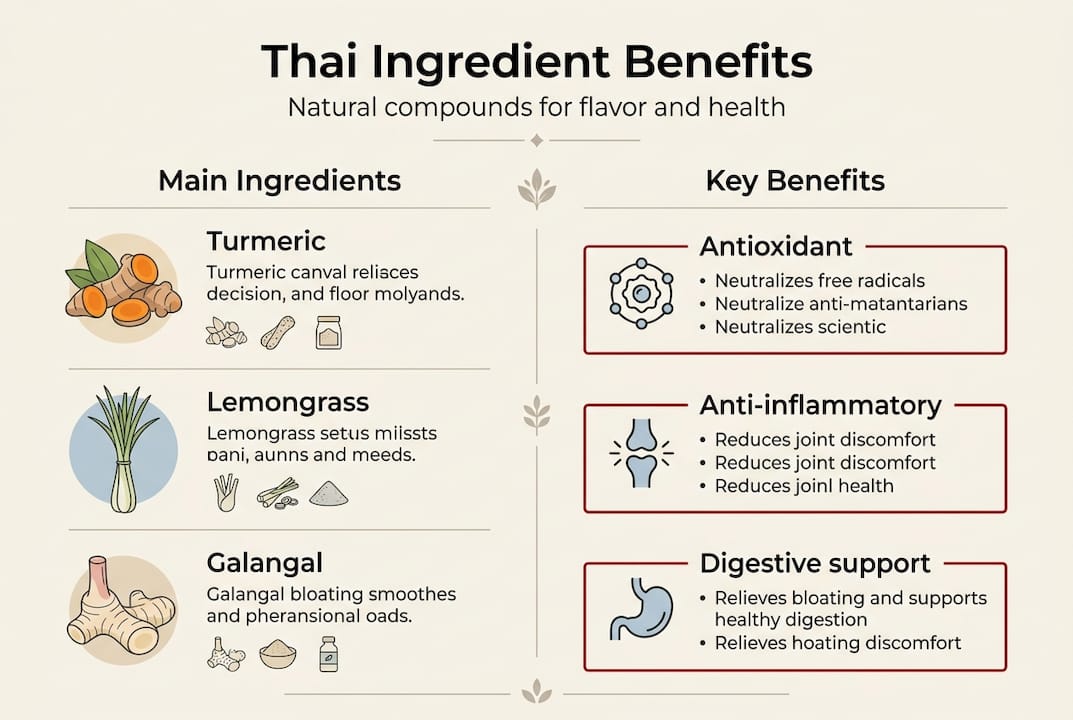
Pro Tip: When ordering curry, choose dishes that use galangal or lemongrass as a base. These ingredients add depth of flavor and real nutritional value at the same time.
Navigating Thai restaurant menus for maximum health
Equipped with knowledge about ingredients, let’s turn to making smart, healthy choices the next time you order at your favorite Thai spot. The good news is that healthy options are everywhere on a Thai menu. You just need to know what to look for.
Start with the numbers. Pad Thai contains roughly 308 to 315 calories per serving, with 15 to 16 grams of protein, 11 to 15 grams of fat, and 28 to 35 grams of carbohydrates. Red curry comes in around 330 calories with 9 grams of protein and 19 grams of fat. These are reasonable numbers for a full meal, especially when paired with vegetables.
The real watch-out is sodium. Fish sauce and soy sauce can push sodium levels to 800 to 2,000 milligrams per dish, and added sugars in sauces can range from 24 to 80 grams per serving. That is where customizing your order makes a real difference.
The balance of Thai flavors actually works in your favor here. Because Thai food engages so many taste receptors at once, you tend to feel satisfied with smaller portions. That natural satiety response is a built-in portion control mechanism.
For plant-forward diners, plant-based milk options in certain Thai soups and desserts offer added prebiotic benefits. Ask what the kitchen uses as a base for their soups and curries.
Smart ordering strategies for healthier Thai meals:
Choose steamed jasmine rice over fried rice to cut fat and calories
Request light sauce or sauce on the side to control sodium
Add extra vegetables to any dish for more fiber and micronutrients
Opt for tofu or shrimp instead of red meat for leaner protein
Explore the best Thai dishes that are broth-based rather than cream-based
Dish | Calories | Protein | Sodium (mg) | Healthier swap |
Pad Thai | 308-315 | 15-16g | 629-768 | Request light sauce |
Red curry | 330 | 9g | 755 | Choose vegetable base |
Tom Yum soup | ~100 | 8g | ~900 | Broth-forward, great choice |
Green papaya salad | ~150 | 3g | ~600 | Ask for less fish sauce |
Pro Tip: Tell your server you prefer less sugar and less salt. Most Thai kitchens are happy to adjust, and the dish will still taste incredible because the herbs carry the flavor.
Beyond flavor: How Thai food can transform your well-being
Choosing healthy options is just the first step. Let’s see what happens when Thai food becomes a regular part of your lifestyle. The benefits extend well beyond individual meals.
The balance of Thai flavors encourages mindful eating. When a dish engages your sweet, sour, salty, and spicy senses simultaneously, you slow down and actually taste your food. That mindfulness naturally reduces overeating, which is one of the most underrated benefits of this cuisine.
Gut health is another major win. Fiber-rich vegetables, fermented proteins like tempeh, and prebiotic-rich ingredients like tamarind seed all contribute to a more diverse gut microbiome. A healthy microbiome is linked to better immunity, improved mood, and more stable energy levels throughout the day.
For Las Vegas locals, exploring vegan Thai options opens up a whole new world of plant-based eating that never feels like a compromise. Dishes like tofu green curry or banana blossom stir-fry are satisfying, flavorful, and genuinely nourishing.
“Empirical data shows that plant-based Thai dietary patterns are associated with lower chronic disease risk, making regular consumption a meaningful long-term health strategy.”
Sustained energy is another benefit that northwest Las Vegas residents notice quickly. Unlike heavy Western meals that cause an afternoon energy crash, a balanced Thai meal with lean protein, vegetables, and complex carbohydrates provides steady fuel. Your digestive health improves, your energy stabilizes, and meals become something you genuinely look forward to rather than something you regret.
Long-term benefits of regular Thai food consumption:
Improved gut microbiome diversity from fiber and prebiotic ingredients
Lower LDL cholesterol and blood pressure from plant-forward eating
Better blood sugar regulation from spice compounds like those in cardamom
Enhanced meal satisfaction that reduces snacking and overeating
Reduced chronic disease risk through consistent anti-inflammatory intake
Our take: The overlooked secrets to thriving on Thai food
Here is something most health articles will not tell you: authentic does not always mean optimal for your health goals, and that is perfectly fine. At Thai Spoon Las Vegas, we have seen that the people who benefit most from Thai cuisine are those who treat it as a conversation, not a transaction. They ask questions. They request adjustments. They try dishes outside their comfort zone.
Focusing on flavor balance rather than calorie counting is a more sustainable approach. When you eat something that genuinely satisfies every taste receptor, you are far less likely to overindulge later. That is not a diet trick. It is just how good food works.
The lesser-known vegetable-based dishes, the ones with banana blossom, bamboo shoots, or Thai eggplant, are where the real nutritional magic happens. Most diners walk past them for the familiar Pad Thai. Both choices are great, but variety is where long-term health gains come from.
For northwest Las Vegas locals, the practical takeaway is simple. Find a Thai restaurant you trust, one that uses fresh ingredients and welcomes customization, and make it a regular stop. Healthy eating habits are built on consistency and enjoyment, not restriction.
Experience the benefits of Thai cuisine in Las Vegas
Ready to put your knowledge into action? Thai Spoon Las Vegas brings authentic, fresh Thai cuisine to the northwest Las Vegas community, just 20 minutes from the Strip and a world away from tourist-heavy dining.

Whether you are exploring the full Thai menu for the first time or looking to discover new healthy favorites, our kitchen is ready to customize your order. Browse our menu offerings to find plant-forward dishes, vegan options, and gluten-free choices that match your wellness goals. Planning a larger gathering? Our catering options bring the same fresh, authentic flavors to your event. Order online for pickup or delivery and experience what real Thai food can do for your health and your taste buds.
Frequently asked questions
Is Thai food healthy for people with specific dietary needs like gluten-free or vegan?
Yes, many Thai dishes adapt easily to gluten-free or vegan diets, particularly those built on rice noodles, fresh vegetables, and plant-based bases. Thai plant-based milks like tamarind seed varieties even offer prebiotic benefits that support gut health.
How can I avoid too much sodium or sugar when ordering Thai food?
Request light sauce, ask for less added sugar, and lean toward steamed or grilled preparations. High sodium from fish sauce and added sugars in sauces are the main culprits, and most kitchens will adjust on request.
Which Thai dishes are best for supporting weight management?
Plant-forward options like green papaya salad, steamed vegetable dishes, and banana blossom-based preparations are excellent choices. Banana blossom supplementation in prediabetics reduced both weight and BMI in clinical research.
What are the long-term health benefits of eating Thai food regularly?
Regular plant-forward Thai eating improves blood pressure, lowers LDL cholesterol, supports gut microbiome diversity, and reduces chronic disease risk. A plant-forward Thai diet showed significant improvements across all these markers in just 12 weeks.
Are there Thai drinks or desserts with health benefits?
Yes, beverages and desserts made with Thai herbs, coconut, or plant-based milks carry real antioxidant and prebiotic value. Thai plant-based milks show high antioxidant activity and support a healthy gut microbiome.
Recommended
Comments