


How balance shapes Thai flavors: the secret to harmony
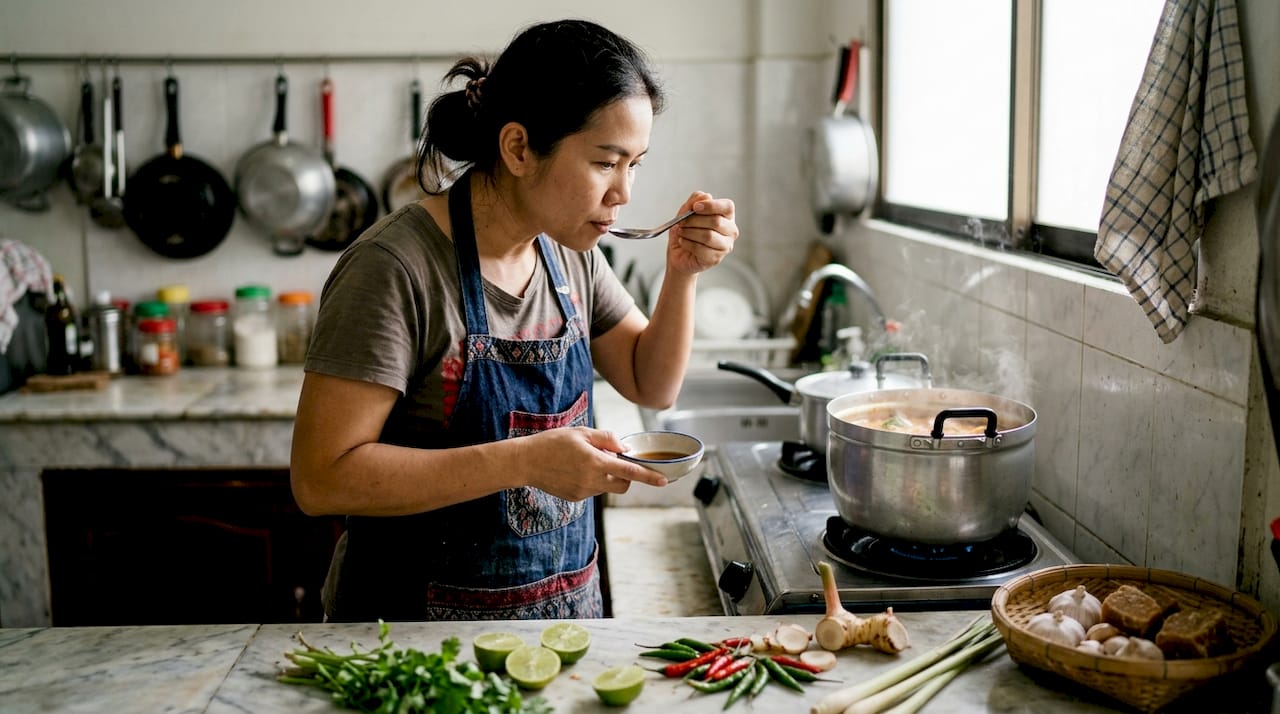
Many Las Vegas diners describe Thai food as a mysterious harmony of flavors they can feel but can’t quite explain. It’s tempting to chalk it up to chili heat or a heavy pour of coconut milk, but the real magic runs much deeper. Thai cuisine achieves flavor balance through a principle called rot chart (sometimes called rot duan), which harmonizes sweet, sour, salty, and spicy alongside bitter, pungent, and umami. Understanding this principle doesn’t just make you a smarter diner. It transforms every bite into something you can actually read, appreciate, and seek out with intention.
Table of Contents
Key Takeaways
Point | Details |
Harmony is core | True Thai cuisine relies on balancing sweet, sour, salty, and spicy—plus umami and more. |
Ingredients matter | Key flavors come from traditional ingredients such as fish sauce, tamarind, lime, and Thai chilies. |
It’s an art, not a formula | Chefs use tasting and adjustment, not fixed recipes, to achieve balanced dishes. |
Regional diversity | Different Thai regions offer unique takes on flavor harmony, from sweet Central to spicy Southern. |
Dine like an expert | Las Vegas food lovers can experience authentic balance by choosing dishes and restaurants that honor these traditions. |
What does balance mean in Thai cuisine?
In Western cooking, balance often means toning things down so no single flavor stands out. Thai balance works the opposite way. Every flavor is meant to be present and distinct, yet none should overpower the others. Think of it less like blending paint into a neutral gray and more like a chord in music where every note is heard clearly.
“Balance creates complex, harmonious bites that prevent any single flavor from dominating, and it reflects a deeper sense of cultural unity within Thai cooking.”
This is why authentic Thai food is balanced in a way that feels alive. Each dish is a negotiation between competing tastes, and the goal is harmony, not neutrality. The seven essential taste pillars that Thai cooks work with are:
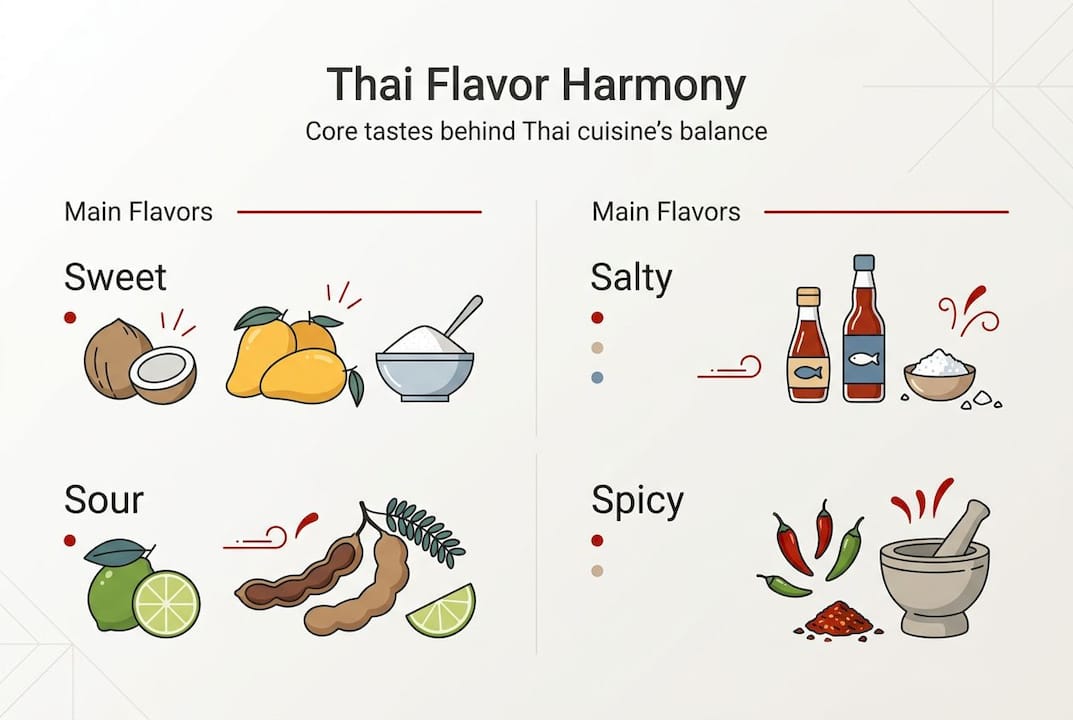
Sweet (from palm sugar, coconut milk, ripe fruit)
Sour (from lime juice, tamarind, vinegar)
Salty (from fish sauce, shrimp paste, soy sauce)
Spicy (from fresh and dried Thai chilies)
Umami (from fermented fish, dried shrimp, mushrooms)
Bitter (from bitter melon, certain herbs and greens)
Pungent (from garlic, shallots, galangal, lemongrass)
Each pillar plays a role. Remove one and the dish loses dimension. Add too much of one and the whole structure collapses.
Essential Thai ingredients and their flavor roles
Knowing the pillars is one thing. Knowing which ingredients carry each flavor is where things get practical. Here’s a quick reference for the core building blocks:
Flavor | Key ingredients |
Sweet | Palm sugar, coconut milk, ripe mango |
Sour | Lime juice, tamarind paste, kaffir lime |
Salty | Fish sauce, shrimp paste, oyster sauce |
Spicy | Thai bird’s eye chilies, dried chili flakes |
Umami | Fermented fish (pla ra), dried shrimp, mushrooms |
Bitter | Bitter melon, Thai eggplant, neem leaves |
Pungent | Garlic, shallots, galangal, lemongrass |
These core ingredients define each flavor pillar and show up across every region of Thailand. A single dish like Tom Yum pulls from at least five of these pillars at once: sour lime and lemongrass, salty fish sauce, spicy chilies, umami from mushrooms, and a touch of sweetness to round it out. That’s not an accident. It’s architecture.
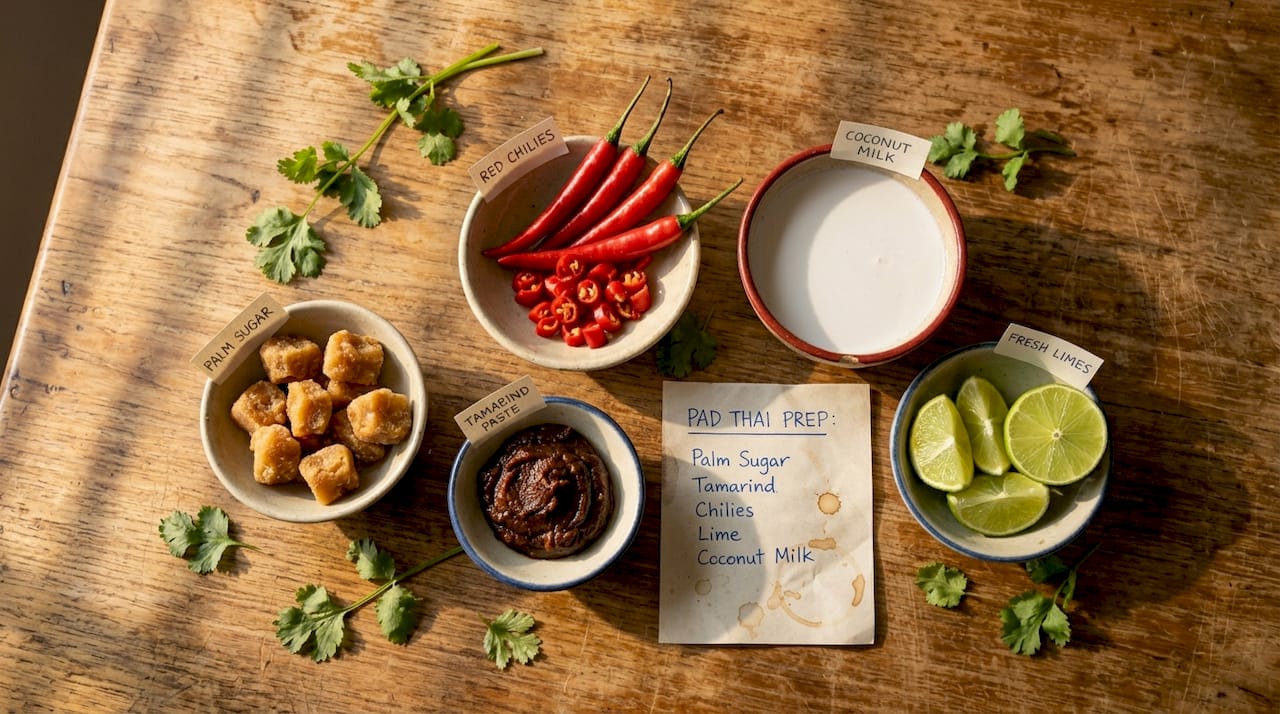
Understanding authentic Thai flavors becomes much easier once you can identify each ingredient’s role. And if you want to go deeper into how these elements combine, exploring what a Thai taste profile actually looks like gives you a useful framework.
Pro Tip: Before your next Thai meal, taste each condiment on the table individually. A small spoonful of fish sauce, a squeeze of lime, a pinch of sugar. Training your palate to recognize each flavor in isolation makes it far easier to appreciate how they work together in a finished dish.
How Thai cooks achieve flavor harmony: step-by-step methodology
Once you understand the ingredients, the next question is how chefs actually put them together. Thai cooking isn’t about following a fixed recipe to the letter. It’s about constant, real-time adjustment.
Here’s the general methodology most Thai cooks follow:
Build the base. Start with aromatics like garlic, shallots, and lemongrass to establish the pungent and umami foundation.
Add the primary protein or vegetables. Let them absorb the base flavors before introducing liquids.
Layer in salty and spicy elements. Fish sauce and chilies go in early so their intensity can mellow slightly with heat.
Taste and adjust gradually. Add sweet or sour elements in small amounts, tasting after each addition.
Finish with acid. Add acids last because heat dulls their brightness, so lime juice squeezed at the end keeps the sour note sharp and fresh.
This iterative approach is what separates a flat dish from a layered one. Balance isn’t baked in from the start. It’s earned through tasting.
Problem | Quick fix |
Too spicy | Add coconut milk or a pinch of palm sugar |
Too salty | Add lime juice or a small amount of sugar |
Too sour | Add fish sauce or palm sugar |
Too sweet | Add lime juice or fish sauce |
Too flat | Add a small amount of fish sauce and fresh chili |
Exploring the best Thai dishes to try is a great way to see this methodology in action across different flavor profiles.
Pro Tip: The most common home-cook mistake is overcorrecting. If a dish is too spicy, it’s tempting to dump in coconut milk. But adding too much shifts the entire balance toward sweet and rich. Always adjust in small amounts, taste, and wait a moment before adding more.
Regional flavor balance: Central, Northern, Isaan, and Southern Thai dishes
Thai balance isn’t one-size-fits-all. The concept stays consistent, but the expression changes dramatically depending on where in Thailand a dish originates.
Central Thailand: The most familiar style for most diners. Balanced sweet-sour profiles define dishes like Pad Thai and green curry. Coconut milk is common, and heat is moderate.
Northern Thailand: Milder and more herbal. Less coconut milk, more fermented flavors, and dishes like Khao Soi that lean on warm spices rather than sharp heat.
Isaan (Northeast): Fiery, sour, and fermented. Dishes like Som Tum (green papaya salad) and larb hit hard with lime, fish sauce, and fresh chilies. Very little sweetness.
Southern Thailand: The most intense region. Intense heat with coconut and turmeric are signatures. Southern curries are richer, spicier, and more pungent than anything from the Central region.
“Isaan and Southern Thai cooking represent the boldest expressions of balance in the country. They don’t soften the edges. They celebrate contrast at full volume.”
When you’re dining in Las Vegas, ask your server which region a dish comes from. It tells you a lot about what to expect. If you enjoy heat, the spicy Thai dishes from Isaan and Southern traditions are worth exploring. For a broader look at how Thai culinary traditions connect to culture and craft, Thai craftsmanship and culinary traditions offer fascinating context.
Authenticity vs. fusion: why balance matters for Las Vegas diners
Not every Thai restaurant in Las Vegas is working from the same playbook. Some prioritize authentic regional balance. Others adapt dishes to suit a broader local palate, which often means Western adaptations run sweeter and milder than the original. Neither is wrong, but knowing the difference helps you choose with intention.
Signs a dish may have drifted from authentic balance:
It tastes primarily sweet with little sour or salty contrast
The heat is completely absent or feels artificial (like hot sauce added at the end)
Coconut milk dominates without any brightness from lime or lemongrass
The dish lacks any bitter or pungent notes
The sauce is thick and uniform rather than layered and complex
Authentic Thai balance preserves cultural meaning. Each flavor represents something, and the harmony between them reflects a philosophy of unity that goes beyond the plate. When a dish is flattened to appeal to one preference, that story gets lost.
Las Vegas has a growing number of spots that take authenticity seriously. Knowing what to look for on a menu, like regional dish names, traditional ingredients listed openly, and condiment tables with fish sauce and fresh chilies, helps you find them. Learning more about authentic vs. fusion Thai food gives you a sharper eye for the difference.
Your tasting roadmap: how to experience balanced Thai flavors in Las Vegas
Knowledge is only useful when you put it to work. Here’s a practical five-step approach for exploring Thai flavor balance in Las Vegas like someone who actually knows what they’re tasting.
Start with Tom Yum. This soup is a masterclass in balance. Tom Yum hits sour-spicy-salty-sweet all at once and gives you an immediate benchmark for what harmony feels like.
Order one dish from each flavor direction. Try something sour-forward (like a tamarind-based dish), something spicy (like a Isaan-style larb), and something sweet-savory (like Pad Thai). Compare them side by side.
Ask your server about regional origins. A good Thai restaurant will know where their dishes come from. This question alone tells you a lot about how seriously they take authenticity.
Use the condiment table intentionally. Add fish sauce, lime, sugar, or chili flakes in small amounts and notice how each one shifts the dish. This is the fastest way to train your palate.
Try a lesser-known dish. Skip the usual order and ask what the kitchen is proud of. Regional specialties often show the most careful balance because they’re closest to the original tradition.
For a curated starting point, the authentic Thai dishes to try list is a solid guide. And if you want to see how Las Vegas fits into the broader world of food cities worth exploring, world food cities puts it in great perspective.
Discover the real taste of Thai balance in Las Vegas
At Thai Spoon Las Vegas, every dish is built around the same principles you’ve just read about. The kitchen works with authentic ingredients and real technique to make sure sweet, sour, salty, and spicy all show up in the right proportions. This isn’t fusion. It’s the real thing, prepared with care and served in a neighborhood setting away from the noise of the Strip.
Whether you’re ready to sit down and taste the balance for yourself or you want to bring that experience home, the authentic Thai menu covers everything from Pad Thai and Yellow Curry to regional specialties that showcase the full range of Thai flavor. Planning something bigger? The Thai catering services make it easy to share authentic Thai balance with a group. Come hungry and curious.
Frequently asked questions
What are the key flavors that must be balanced in Thai cooking?
Thai cooking balances seven core pillars: sweet, sour, salty, and spicy form the foundation, with umami, bitter, and pungent adding the complexity that makes Thai food feel layered rather than flat.
How do Thai chefs adjust a dish if it tastes too salty or spicy?
For a dish that’s too salty, a squeeze of lime or a pinch of sugar helps restore balance; for too much spice, add coconut milk or a small amount of palm sugar, always in small increments to avoid overcorrecting.
Are Thai dishes in Las Vegas authentically balanced?
It varies by restaurant. Some spots, like Thai Spoon emphasizing regional balance, prioritize authentic flavor harmony, while others adapt dishes to local preferences. Asking about regional origins is the quickest way to gauge authenticity.
Why is balance considered so important in Thai cuisine?
Balance prevents any flavor from overwhelming the dish, creating a harmony that reflects Thai cultural values and makes every bite more satisfying and complex than a single-note dish ever could be.
Recommended
Comments