


What is mango sticky rice? Authentic Thai dessert
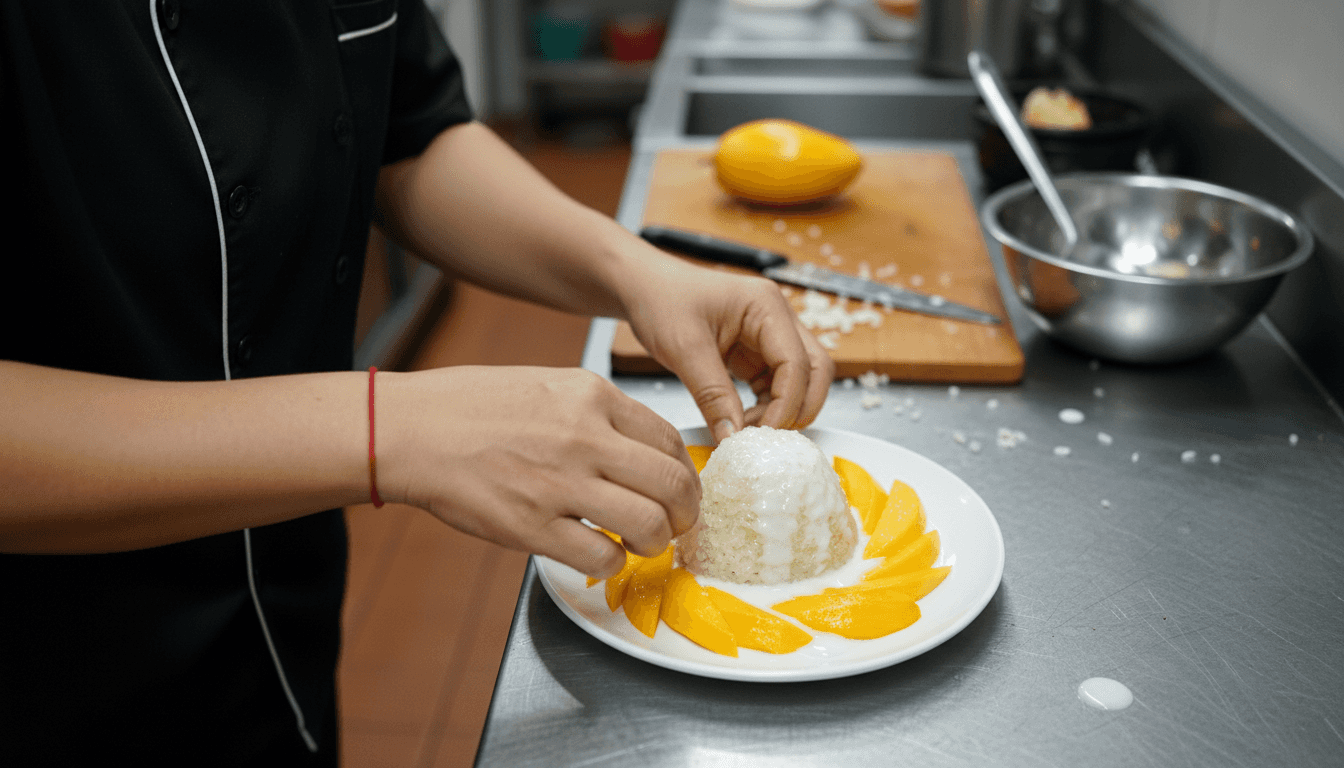
You might think mango sticky rice is just sweet rice topped with fruit. In reality, this beloved Thai dessert combines glutinous rice, coconut milk, and ripe mango in a carefully balanced harmony of sweet, salty, and creamy flavors. This article reveals what makes authentic mango sticky rice special, from its traditional ingredients and preparation to its cultural significance and where to find it in northwest Las Vegas.
Table of Contents
Key takeaways
Point | Details |
Core identity | Mango sticky rice (Khao Niew Mamuang) is a traditional Thai dessert combining glutinous sticky rice, coconut milk, and ripe mango. |
Preparation method | Sticky rice is soaked, steamed, and infused with sweetened coconut milk, then topped with salted coconut sauce. |
Cultural importance | Traditionally enjoyed during Thailand’s mango season (March to June) and festivals like Songkran, symbolizing sweetness and prosperity. |
Flavor balance | The dessert achieves harmony through sweet, salty, and creamy elements with contrasting textures between chewy rice and juicy mango. |
Authenticity markers | Genuine versions use specific mango varieties like Nam Dok Mai and follow precise preparation methods distinct from similar desserts. |
What is mango sticky rice?
Mango sticky rice is a traditional Thai dessert called ‘Khao Niew Mamuang’ that uses glutinous sticky rice steamed and macerated in sweet coconut syrup. The dish represents centuries of Thai culinary tradition and showcases the country’s abundant tropical harvests.
The main components create a deceptively simple yet sophisticated flavor profile:
Glutinous sticky rice provides the chewy, tender base
Full-fat coconut milk infuses sweetness and creaminess
Ripe mango slices add natural fragrance and juicy texture
Salted coconut sauce balances sweetness with savory notes
Toasted mung beans (optional) contribute nutty crunch
Preparation begins with soaking the rice for several hours to achieve proper moisture content. After steaming, the rice absorbs a sweetened coconut milk mixture while still warm. The process requires precise timing and temperature control to avoid mushy or dry results.
The final presentation places golden mango slices alongside coconut-infused rice, drizzled with salted coconut sauce. This combination delivers a multi-layered experience that distinguishes it from Western fruit desserts. The sticky rice explained on Thai Spoon’s website offers deeper insight into this essential ingredient.
Understanding the fundamentals helps you appreciate why authentic versions require specific techniques and ingredients. The dish embodies Thai cooking philosophy balancing contrasting flavors and textures to create harmony. Each element plays a crucial role in the final sensory experience, from the rice’s chewy bite to the mango’s perfumed sweetness.
Having defined the dish, let’s explore the specific ingredients and traditional techniques that create authentic mango sticky rice.
Ingredients and preparation methods
Authentic mango sticky rice demands specific ingredients that cannot be substituted without compromising the final result. Sweet sticky rice should be glutinous rice labeled ‘product of Thailand’, distinct from sushi or jasmine rice. This variety provides the essential chewy, sticky texture that defines the dessert.
The preparation follows a methodical sequence:
Rinse sticky rice multiple times until water runs clear to remove excess starch
Soak rice in room temperature water for 4 to 6 hours or overnight
Drain thoroughly and arrange rice in a steamer lined with cheesecloth
Steam for 25 to 30 minutes until grains become translucent and tender
Transfer hot rice to a bowl and fold in sweetened coconut milk mixture
Let rice rest covered for 20 to 30 minutes to absorb liquid fully
Prepare salted coconut sauce separately for drizzling
Coconut milk quality directly impacts the final flavor. Coconut milk in mango sticky rice is traditionally fresh or high-quality full-fat coconut milk with salt added in relatively high amounts to balance sweetness. Light or reduced-fat versions produce watery, bland results lacking the characteristic richness.
The sugar to salt ratio requires careful calibration. Too much sugar overwhelms the palate, while insufficient salt fails to provide the necessary counterbalance. Traditional recipes use palm sugar or white sugar combined with sea salt in precise proportions.
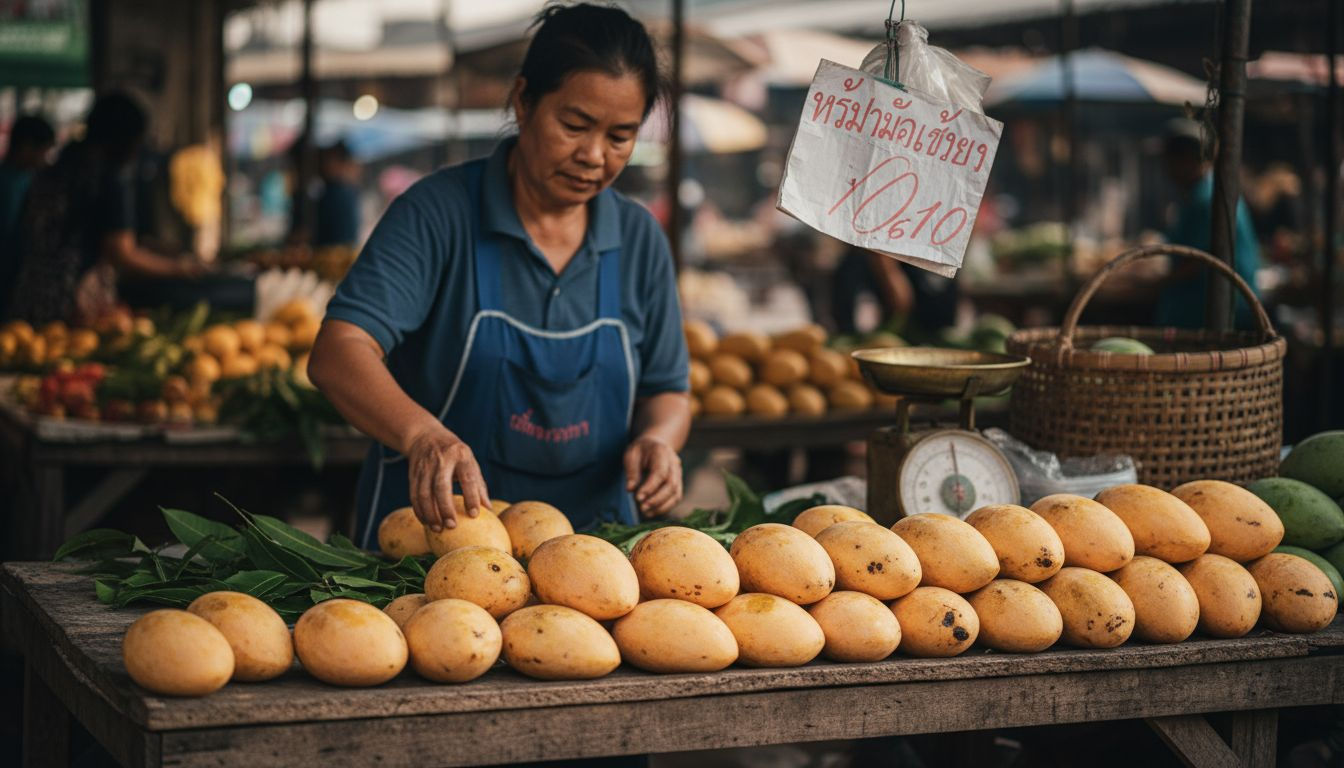
Mango selection significantly affects the dessert’s success. The mango type affects flavor with Thai dessert varieties like Nam Dok Mai and Ataulfo preferred for their sweet, fragrant, juicy qualities. Underripe or fibrous mangoes detract from the intended texture contrast.
Pro Tip: Test rice doneness by pressing a grain between your fingers. It should compress easily without being mushy. If grains remain hard in the center, steam for 5 more minutes.
The salted coconut sauce deserves special attention. This topping uses coconut cream (the thick layer from canned coconut milk) mixed with salt and sometimes a small amount of rice flour for thickening. The sauce should pour easily but coat the back of a spoon.
Choosing Thai rice correctly ensures you start with the right foundation. Look for packages labeled specifically as sticky rice or sweet rice from Thailand. Avoid generic glutinous rice from other regions, which may have different starch compositions.
After detailing preparation methods, let’s examine the cultural and seasonal context that makes mango sticky rice meaningful beyond its taste.
Cultural and seasonal significance
Mango sticky rice connects deeply to Thailand’s agricultural calendar and social traditions. Mango sticky rice is especially popular during Thailand’s mango season from March to June and is associated with festivals like Songkran, symbolizing generosity and sweetness for the year ahead.
The dessert’s timing coincides with peak mango harvest when fruit reaches optimal ripeness and flavor intensity. Thai farmers cultivate specific varieties for dessert use, ensuring the perfect balance of sweetness and texture. This seasonal availability makes the dish a celebrated annual tradition rather than an everyday treat.
Several cultural dimensions elevate mango sticky rice beyond simple dessert status:
Songkran celebrations feature the dessert as an offering symbolizing good fortune
Family gatherings use it to strengthen social bonds through shared enjoyment
Street vendors and home cooks alike take pride in their preparation methods
The dish represents Thailand’s agricultural abundance and culinary heritage
Sharing mango sticky rice expresses hospitality and generosity
During Songkran, Thailand’s New Year festival in April, mango sticky rice appears at ceremonies and family meals. The dessert’s presence carries symbolic weight, representing wishes for sweetness and prosperity in the coming year. Its consumption becomes a meaningful ritual connecting past traditions with present celebrations.
Community aspects enhance the dessert’s significance. Vendors at local markets compete to offer the best version, with customers returning to their preferred stalls year after year. These relationships build trust and preserve traditional techniques across generations. Home cooks modify recipes based on family preferences while maintaining core authentic elements.
The seasonal nature creates anticipation and appreciation. Unlike year-round desserts, mango sticky rice’s limited availability makes each serving more special. This scarcity drives demand and maintains the dish’s elevated status in Thai dessert culture.
With cultural context established, let’s explore the unique flavor and texture that define mango sticky rice’s sensory appeal.
Flavor and texture dynamics
The magic of mango sticky rice emerges from carefully orchestrated contrasts that create a complete sensory experience. The sticky rice is chewy and creamy because of coconut infusion with fresh mango adding juicy softness and natural sweetness while salted coconut sauce balances sweetness with savory notes.
Textural elements work together in layers:
Sticky rice delivers a pleasantly chewy, almost bouncy resistance
Coconut milk creates creamy softness coating each grain
Ripe mango provides silky, yielding juice bursts
Toasted mung beans (when included) add subtle crunch
Salted coconut sauce introduces smooth, velvety liquid
This interplay distinguishes mango sticky rice from Western desserts that typically emphasize single texture profiles. Each bite combines multiple sensations, keeping your palate engaged throughout. The chewy rice contrasts with melting mango, while creamy elements soften the experience.
Flavor complexity relies on the interaction between sweet, salty, and umami components. The rice absorbs coconut milk’s natural sweetness amplified by added sugar. Mango contributes fruity, floral notes with slight tang. Salt in the coconut sauce provides a crucial counterpoint, preventing cloying sweetness and enhancing all other flavors.
Temperature also plays a role. Traditionally served at room temperature or slightly warm, this allows the coconut-infused rice to maintain its tender texture without hardening. Cold versions lose the characteristic creaminess as coconut fat solidifies. Overly hot presentations can make the dessert too soft and formless.
Pro Tip: Let mango sticky rice sit for 5 minutes after plating. This brief rest allows flavors to meld and temperatures to equalize for optimal taste.
The aromatic dimension adds another layer. Ripe mango releases tropical fruit esters that blend with coconut’s rich, nutty fragrance. These scents prepare your palate before the first bite, building anticipation and enhancing flavor perception.
Having clarified flavor dynamics, let’s address common misconceptions that can lead to inauthentic versions or disappointed expectations.
Common misconceptions about mango sticky rice
Several persistent myths surround mango sticky rice, leading to confusion about authentic preparation and ingredients. Sticky rice is not interchangeable with jasmine or sushi rice and authentic sweetness comes from both coconut-infused rice and mangoes with salt critical for flavor balance.
The most damaging misconception involves rice selection. Regular jasmine rice, despite being Thai, lacks the glutinous properties needed for proper texture. Sushi rice contains different starch ratios designed for vinegar absorption, not coconut milk infusion. Using wrong rice types produces mushy or separated grains instead of the characteristic sticky cohesion.
Other common misunderstandings include:
Believing any ripe mango works equally well (fiber content and sweetness vary significantly)
Thinking the dessert should be purely sweet without salt (salt is essential for balance)
Assuming coconut milk and coconut cream are interchangeable (they serve different purposes)
Expecting the rice to taste like Western rice pudding (texture and preparation differ fundamentally)
Imagining you can skip the resting period after mixing rice with coconut milk (absorption requires time)
The salt question particularly confuses Western palates accustomed to strictly sweet desserts. In Thai cuisine, salt enhances sweetness rather than competing with it. The salted coconut sauce prevents flavor fatigue and makes each bite as satisfying as the first. Omitting salt results in one-dimensional, cloying sweetness.
Mango variety matters more than most realize. Only specific mango varieties should be used, with Nam Dok Mai and Ataulfo offering ideal sweetness and low fiber content. Common grocery store mangoes like Tommy Atkins contain more fiber and less complex flavor, compromising the final result.
Some believe mango sticky rice is simply assembled rather than carefully prepared. The rice requires precise steaming time, proper coconut milk absorption, and correct resting periods. Rushing any step produces inferior texture and flavor integration.
Another myth suggests you can prepare components days in advance. While rice can be made several hours ahead, it loses quality when refrigerated and reheated. Coconut sauce separates if stored too long. Fresh preparation within a few hours of serving delivers optimal results.
Use this myth-busting insight to appreciate how mango sticky rice compares to other Thai desserts.
Comparison with other Thai desserts
Mango sticky rice uniquely uses glutinous rice focusing on texture contrast and layered sweet-salty-creamy flavors, differing from custards or jellies which rely on creamy or gelatin textures. This distinction helps explain why the dessert occupies a special place in Thai cuisine.
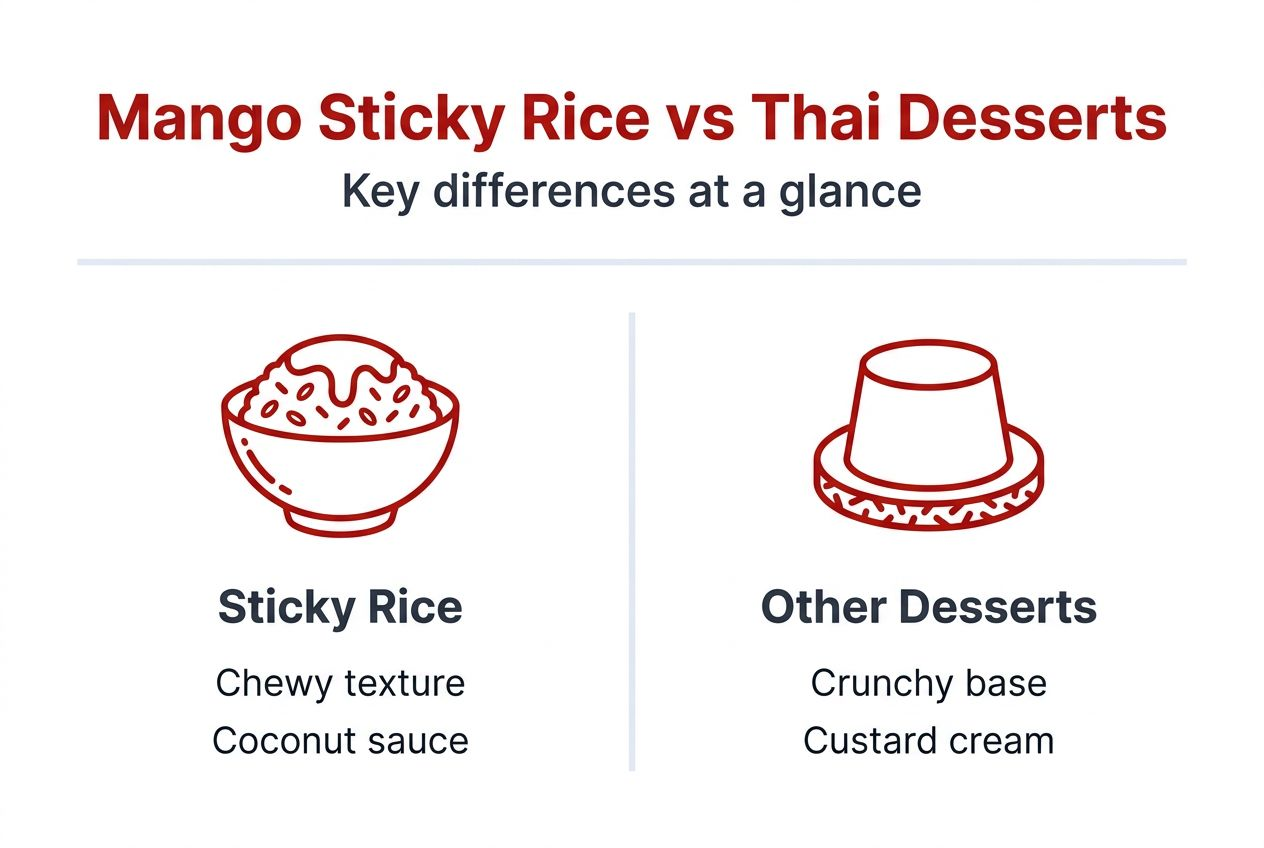
Dessert | Base Ingredient | Texture Profile | Flavor Focus | Fruit Component |
Mango Sticky Rice | Glutinous rice | Chewy, creamy, juicy | Sweet, salty, coconut | Fresh ripe mango |
Khanom Krok | Rice flour, coconut | Crispy outside, creamy inside | Sweet, coconut | None or corn |
Tub Tim Grob | Water chestnuts, tapioca | Crunchy, gelatinous | Sweet, coconut | None |
Sangkhaya | Coconut milk, eggs | Smooth custard | Sweet, rich | None (steamed in pumpkin) |
These differences highlight mango sticky rice’s unique position:
Only dessert prominently featuring fresh seasonal fruit as primary component
Relies on grain texture rather than eggs, flour, or gelatin for structure
Emphasizes texture contrast between multiple elements in single serving
Incorporates savory salt element more prominently than other sweets
Requires specialized glutinous rice unavailable in most Western markets
Khanom Krok (coconut rice pancakes) uses rice flour but creates a completely different texture through cooking method. The crispy exterior and creamy interior contrast within each piece, while mango sticky rice contrasts between separate components on the plate.
Tub Tim Grob (water chestnut in coconut milk) shares coconut milk as a base but focuses on the crunch of water chestnuts coated in colored tapioca. The texture is more uniform throughout, lacking mango sticky rice’s dramatic contrasts.
Sangkhaya (coconut custard) delivers pure creaminess without chewy or crunchy elements. Often steamed inside a small pumpkin, it emphasizes rich, smooth mouthfeel rather than textural variety.
The layered flavor approach in mango sticky rice also sets it apart. While other Thai desserts may be sweet with coconut undertones, few incorporate the deliberate sweet-salty balance that defines this dish. The salted coconut sauce acts as a flavor bridge, tying sweet rice and mango together while preventing monotony.
After highlighting what makes the dessert unique, let’s guide you toward experiencing authentic mango sticky rice locally.
Where to try authentic mango sticky rice locally
Finding genuine mango sticky rice in northwest Las Vegas requires knowing where chefs prioritize traditional ingredients and preparation methods. Thai Spoon Las Vegas stands out as a leading destination for this authentic dessert, located conveniently about 20 minutes from the Strip.
The restaurant’s commitment to authenticity shows in several ways:
Sources proper glutinous sticky rice imported from Thailand
Uses full-fat coconut milk in traditional sweet and salted preparations
Prepares rice using proper soaking, steaming, and infusion techniques
Selects appropriate mango varieties when seasonally available
Trains staff on correct assembly and presentation methods
Thai Spoon’s location in northwest Las Vegas makes it accessible for local residents seeking authentic Thai cuisine without tourist area crowds and pricing. The restaurant offers dine-in service where you can experience mango sticky rice in a relaxed atmosphere. Takeout and delivery options let you enjoy the dessert at home, though texture is best appreciated fresh.
Beyond mango sticky rice, Thai Spoon provides context for understanding Thai culinary traditions. Their menu features complementary dishes that showcase the same attention to authentic ingredients and techniques. Exploring thai sticky rice types helps you appreciate the variety used across different Thai preparations.
The restaurant’s approach to best Thai dishes emphasizes educational dining. Staff can explain preparation methods, ingredients, and cultural significance, enriching your appreciation beyond just taste. This knowledge helps you distinguish authentic versions from simplified adaptations.
Convenience features include online ordering for pickup and delivery, making it easy to satisfy cravings for authentic Thai desserts. The restaurant accommodates dietary preferences and can adjust sweetness levels while maintaining traditional flavor balance. Large party reservations allow groups to share the cultural experience together.
For local food enthusiasts committed to exploring authentic ethnic cuisine, Thai Spoon offers consistent quality backed by traditional knowledge. The restaurant’s community focus and dedication to genuine Thai flavors make it a reliable choice for experiencing mango sticky rice as it’s meant to be enjoyed.
Discover authentic Thai flavors at Thai Spoon Las Vegas
Ready to experience genuine mango sticky rice and explore the full range of Thai culinary traditions? Thai Spoon Las Vegas brings authentic flavors to northwest Las Vegas with carefully prepared dishes using traditional ingredients and techniques. Browse the complete Thai Spoon menu page to discover classic favorites from Pad Thai to Yellow Curry alongside seasonal specialties like mango sticky rice.
Learn more about Thai Spoon menu offerings that accommodate vegan and gluten-free diets while maintaining authentic flavors. Planning a special event? Thai Spoon catering services let you share the richness of Thai cuisine with family and friends, bringing restaurant-quality dishes to your gathering. Order online for convenient pickup or delivery and taste the difference authentic preparation makes.
FAQ
What is mango sticky rice made of?
Core ingredients include glutinous sticky rice sourced from Thailand, full-fat coconut milk, ripe mango (preferably Nam Dok Mai or Ataulfo varieties), sugar, and sea salt. A salted coconut sauce tops the dish, sometimes garnished with toasted mung beans for added texture.
How is mango sticky rice traditionally prepared?
Rice is soaked for 4 to 6 hours, then steamed for 25 to 30 minutes until tender. The hot rice is folded with sweetened coconut milk and left to rest for 20 to 30 minutes for absorption. Salt is added to both the rice mixture and coconut sauce to balance sweetness and enhance coconut flavor.
When is mango sticky rice typically eaten?
The dessert is most popular during Thailand’s mango season from March to June when fruit reaches peak ripeness. It’s traditionally enjoyed during Songkran (Thai New Year) in April, symbolizing sweetness and prosperity for the coming year, and at family gatherings throughout mango season.
Where can I find authentic mango sticky rice in northwest Las Vegas?
Thai Spoon Las Vegas serves authentic mango sticky rice prepared with traditional methods and imported Thai ingredients. Located conveniently for northwest Las Vegas residents, the restaurant offers dine-in, takeout, and delivery options. Explore their sticky rice explained guide and best Thai dishes to enhance your Thai cuisine knowledge.
Recommended
Comments