


What Is a Thai Feast and Why It Matters Locally
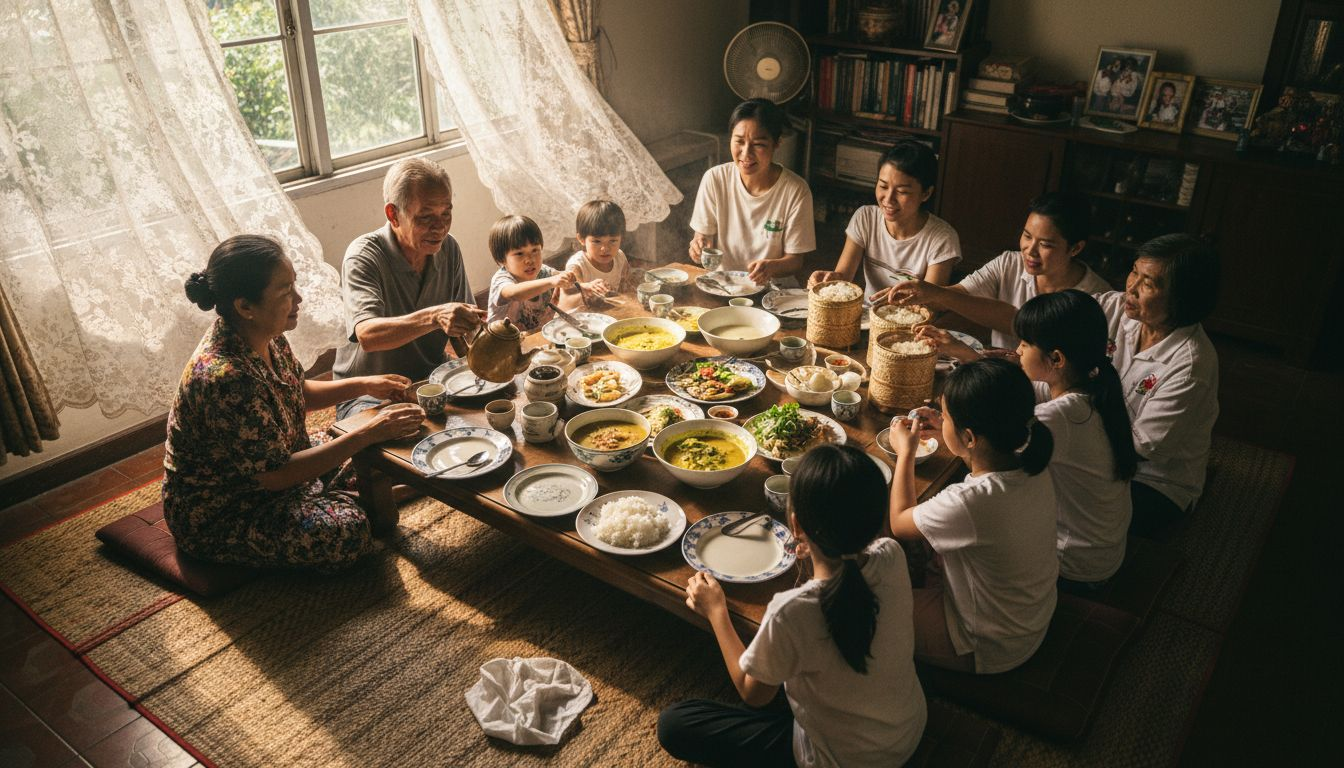
Most American diners in Northwest Las Vegas crave more than just another quick meal when searching for Thai food. Authentic Thai feasts deliver an artful blend of flavors and community, transforming dinner into a celebration of culture and taste. With dishes featuring a balance of sweet, sour, salty, and spicy elements, over 80 percent of health-conscious eaters prefer Thai cuisine for its fresh ingredients and adaptability. Discover how a real Thai feast fulfills both busy schedules and the desire for genuine, flavorful experiences.
Table of Contents
Key Takeaways
Point | Details |
Culinary Journey | A Thai feast is a vibrant culinary experience, showcasing a balance of sweet, sour, salty, and spicy elements that encourages communal sharing. |
Signature Dishes | Classic Thai dishes demonstrate a complex blend of flavors, rooted in a rich culinary heritage and diverse ingredients. |
Cultural Etiquette | Emphasizes respect and communal dining; wait for the eldest to start eating as a cultural practice. |
Dietary Flexibility | Thai cuisine easily accommodates various dietary needs, allowing for modifications without compromising on flavor. |
Defining a Thai Feast Experience
A Thai feast represents far more than a simple meal - it’s a vibrant culinary journey that celebrates complex flavor interactions and cultural traditions. Thai cuisine’s remarkable balance of sweet, sour, salty, and spicy elements transforms dining into a multisensory experience that connects people through shared gastronomic pleasure.
Traditionally, a Thai feast encompasses multiple dish categories designed to create a harmonious dining adventure. These typically include tom (boiled dishes), yam (spicy salads), tam (pounded foods), and kaeng (curries), each playing a unique role in creating a balanced meal. Regional variations throughout Thailand’s diverse geography contribute distinctive ingredients and cooking techniques, ensuring that no two Thai feasts are exactly alike.
What distinguishes a Thai feast is its intentional complexity and social significance. Unlike western dining styles focusing on individual plates, Thai feasts encourage communal eating where multiple dishes are shared simultaneously. Diners experience a symphony of flavors, textures, and aromas that reflect generations of culinary wisdom and cultural exchange. The meal becomes a celebration of community, tradition, and the intricate art of flavor balancing.
Pro tip: When enjoying a Thai feast, sample small portions from each dish to experience the full range of flavor interactions and appreciate the culinary artistry.
Here’s a summary comparing major dish categories in a traditional Thai feast:
Category | Typical Preparation | Role in the Feast | Signature Example |
Tom (Boiled) | Simmered in broth | Adds lightness, depth | Tom yum kung (shrimp soup) |
Yam (Salads) | Mixed with spices | Brings heat and freshness | Yam talay (seafood salad) |
Tam (Pounded) | Crushed ingredients | Enhances crunch, tang | Som tam (papaya salad) |
Kaeng (Curries) | Stewed with coconut | Provides richness, warmth | Massaman curry |
Signature Dishes and Essential Flavors
Every Thai feast is a vibrant tapestry of flavors, with signature dishes that represent a complex culinary heritage. Classic offerings like tom yum kung (spicy shrimp soup), pad thai (stir-fried rice noodles), and som tam (green papaya salad) showcase the intricate balance of sweet, sour, salty, and spicy elements that define authentic Thai cuisine.
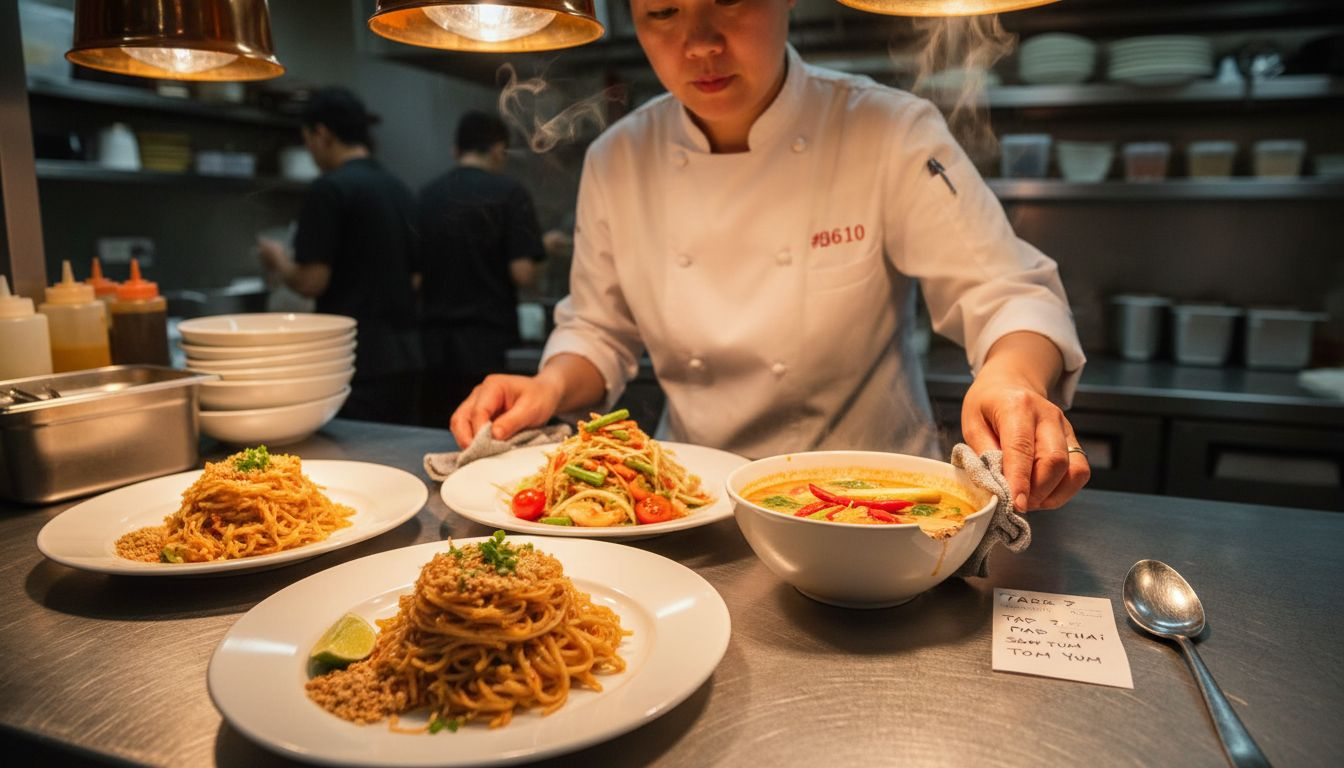
The essential flavor profile of Thai cuisine stems from a remarkable combination of fresh herbs and spices. Ingredients like lemongrass, galangal, coconut milk, and chili peppers create a sophisticated flavor symphony that distinguishes Thai cooking from other culinary traditions. Massaman curry represents a perfect example of this complexity, blending Persian, Indian, and Malay influences with local Thai ingredients to create a rich, fragrant dish that tells a story of cultural exchange.
Cooking techniques play a crucial role in Thai feast preparation. Stir-frying and deep-frying methods, influenced by Chinese culinary traditions, transform simple ingredients into extraordinary dishes. The emphasis is not just on taste, but on creating a harmonious dining experience where each dish complements the others, inviting diners to explore a full spectrum of flavors and textures.
Pro tip: When exploring Thai cuisine, sample small portions of different dishes to appreciate the intricate flavor balance and culinary artistry.
Customs and Etiquette for Thai Feasts
Thai feast customs represent a profound cultural experience that extends far beyond simple dining. Rooted in deep traditions of respect and community, these gatherings reflect intricate social protocols that honor both food and fellowship. Unlike Western dining styles, Thai feasts emphasize communal sharing, with multiple dishes placed centrally for everyone to enjoy together.
Dining etiquette in Thai culture is nuanced and meaningful. Traditionally, meals were consumed while seated on floor mats, using the right hand for eating - a practice that symbolizes connection and humility. Modern Thai dining has evolved, but core customs of respect and hospitality remain unchanged. Interestingly, forks and spoons are preferred over chopsticks, a subtle distinction that reflects Thailand’s unique cultural identity and independence from direct Chinese culinary influences.
Respect for hierarchy plays a significant role in Thai feast customs. Elders are served first, and diners are expected to wait until the oldest or most senior person begins eating. The order of serving and the way dishes are shared communicate deep cultural values of deference, gratitude, and social harmony. Religious and festive occasions particularly highlight these traditions, where food becomes a medium of spiritual and social expression.
Pro tip: When attending a Thai feast, observe the communal dining style and wait for the eldest to start eating as a sign of respect and cultural appreciation.
Accommodating Dietary Needs and Requests
Thai cuisine offers remarkable flexibility for accommodating diverse dietary needs, making it an ideal choice for guests with varying nutritional requirements. The inherent diversity of Thai cooking allows for easy modifications, ensuring that everyone can enjoy a delicious feast regardless of dietary restrictions. From vegetarian options to dishes with adjusted spice levels, Thai food provides multiple ways to customize meals without compromising flavor or cultural authenticity.
Dietary guidelines in Thailand emphasize balanced nutrition and variety, which translates directly into feast preparation. Traditional Thai menus naturally incorporate a wide range of ingredients including rice, vegetables, legumes, and proteins, making it relatively straightforward to create alternative dishes. Cooking methods like steaming and boiling further support health-conscious preparations, allowing chefs to craft meals that meet specific dietary needs without sacrificing taste or presentation.
Accommodating special dietary requests requires communication and understanding. Vegetarians can enjoy dishes featuring tofu, tempeh, and an abundance of vegetables. Those with seafood or meat allergies can request modifications, and individuals seeking lower-spice options can have sauces served separately. The key is working with the culinary team to understand individual needs and find creative solutions that honor both the guest’s requirements and the rich traditions of Thai cuisine.
Pro tip: Always communicate your dietary needs in advance to ensure the kitchen can prepare personalized dishes that meet your specific requirements.
Comparing Thai Feasts to Other Cuisines
Thai feasts represent a unique culinary landscape that distinguishes itself from other regional cuisines through an extraordinary approach to flavor complexity. Unlike Chinese cuisine’s emphasis on texture or Indian cooking’s heavy spice profiles, Thai feasts create a harmonious symphony of taste sensations that dance across the palate. The deliberate balance of sweet, sour, salty, bitter, and spicy elements makes each dish a nuanced experience that goes beyond simple ingredient combination.
Comparative studies highlight Thai cuisine’s remarkable flavor integration, revealing how it differs fundamentally from neighboring culinary traditions. Where Chinese meals might prioritize cooking technique and Indian feasts showcase intricate spice layering, Thai cuisine focuses on creating a delicate equilibrium that allows each ingredient to shine. The communal dining style further sets Thai feasts apart, encouraging shared experiences and interactive meal consumption that transform eating from a mere nutritional activity into a social celebration.
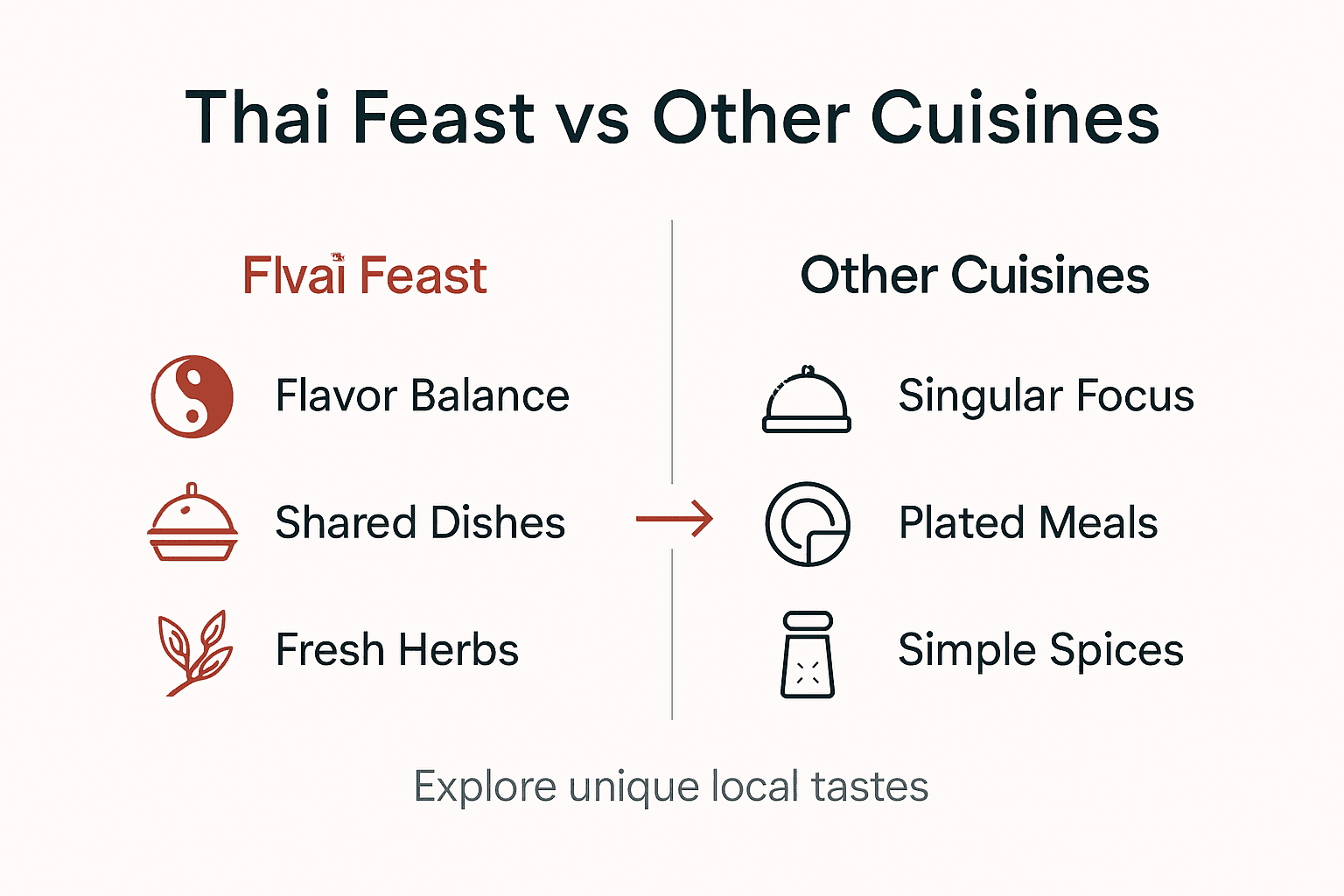
The cultural diversity embedded in Thai feast preparation reflects a culinary philosophy of inclusivity and adaptation. Fresh herbs, locally sourced ingredients, and flexible cooking methods enable Thai chefs to craft meals that can be easily modified to suit different dietary needs and preferences. This approach contrasts sharply with more rigid culinary traditions, where recipes are treated as immutable scripts rather than adaptable experiences.
Pro tip: Explore Thai cuisine with an open mind, sampling multiple dishes to fully appreciate the complex flavor interactions that make these feasts truly extraordinary.
Here’s how Thai feasts differ from neighboring regional cuisines:
Cuisine | Flavor Focus | Dining Style | Ingredient Flexibility |
Thai | Balanced sweet, sour, spicy | Communal, shared plates | Very adaptable |
Chinese | Texture, umami | Individual or shared plates | Moderate flexibility |
Indian | Layered spices | Individual plates | Recipe-driven |
Malay | Aromatic, moderate heat | Communal or family-style | Adaptable ingredients |
Experience the True Essence of a Thai Feast Locally
Discover how the authentic balance of flavors and communal spirit of a Thai feast can come alive right here in Northwest Las Vegas. If you have ever wondered how to truly appreciate the delicate harmony of sweet, sour, salty, and spicy elements or longed to share an extraordinary meal with friends and family, Thai Spoon Las Vegas offers a genuine cultural dining experience just 20 minutes from the Strip. From traditional favorites like Pad Thai and Yellow Curry to specialized vegan and gluten-free options, every dish celebrates the artistry of Thai cuisine with respect to your unique dietary needs.
Don’t miss the chance to immerse yourself in a feast that honors deep-rooted customs and vibrant flavors while enjoying convenient online ordering, unbeatable lunch specials, and attentive catering services. Visit Thai Spoon Las Vegas today to reserve your spot, order for pickup or delivery, and bring the warmth and communal joy of a traditional Thai feast to your table now.
Frequently Asked Questions
What is a Thai feast?
A Thai feast is a communal dining experience that features multiple dishes, each representing a balance of flavors such as sweet, sour, spicy, and salty. It highlights traditional culinary practices and encourages sharing among diners, making it a celebration of community and culture.
What are the main categories of dishes in a Thai feast?
Thai feasts typically include categories like tom (boiled dishes), yam (spicy salads), tam (pounded foods), and kaeng (curries). Each category plays a unique role in creating a harmonious and balanced meal.
How can I accommodate dietary needs during a Thai feast?
Thai cuisine is flexible and can easily accommodate various dietary needs. For example, dishes can be modified to be vegetarian or less spicy. It’s essential to communicate dietary requests in advance to ensure personalized meal preparations.
What distinguishes Thai feasts from other cuisines?
Thai feasts stand out due to their focus on balancing flavors, communal dining style, and the adaptability of ingredients. Unlike some other culinary traditions, Thai cuisine emphasizes the harmonious integration of flavors that allows each dish to complement the others.
Recommended

Comments