


Delicious ways to use Thai red curry paste
TL;DR:
Thai red curry paste is highly versatile and essential for more than just basic curries, especially when cooked properly with heat and fat.
Choosing quality store-bought brands like Mae Ploy, Maesri, or Aroy-D allows for consistent results, with proper storage extending freshness.
Mastering techniques such as frying the paste thoroughly, balancing flavors, and understanding ingredient interactions transforms simple dishes into restaurant-quality Thai cuisine.
You bought a jar of Thai red curry paste for one recipe, and now it’s sitting in your fridge, barely touched. Sound familiar? Most home cooks use it once for a basic curry and never think beyond that. But Thai red curry paste is genuinely one of the most versatile flavor bases in Asian cooking, packed with lemongrass, galangal, dried chilies, shrimp paste, and kaffir lime zest. This guide walks you through everything: which brands to buy, how to cook with the paste properly, five distinct dish ideas, and the troubleshooting tricks that separate decent results from genuinely great ones.
Table of Contents
What you need: Thai red curry paste, key ingredients, and recommended brands
Master the method: how to cook with Thai red curry paste like a pro
Beyond curry: 5 delicious dishes to make with Thai red curry paste
Pro-level troubleshooting and tips for cooking with Thai red curry paste
Why most cooks overcomplicate (or underuse) Thai red curry paste
Ready for authentic Thai flavor? Explore, order, or get inspired
Key Takeaways
Point | Details |
Red curry paste is versatile | You can create curries, stir-fries, soups, and appetizers using Thai red curry paste. |
Balance is key | Achieve an authentic Thai taste by balancing spicy, salty, sweet, and sour notes in every dish. |
Technique matters | Frying the paste and adding ingredients in stages makes the flavors bold and aromatic. |
Experiment confidently | With a good store-bought paste and a little know-how, it’s easy to make restaurant-quality Thai dishes at home. |
What you need: Thai red curry paste, key ingredients, and recommended brands
Getting the right supplies makes everything easier. Thai red curry paste works as a base, not a seasoning, so the other ingredients you pair with it matter just as much as the paste itself.
Essential base ingredients for most Thai red curry paste dishes:
Full-fat coconut milk (not light, which breaks easily)
Fish sauce or soy sauce for vegans
Palm sugar or brown sugar
Lime juice and kaffir lime leaves
Fresh aromatics: garlic, shallots, lemongrass
Neutral oil like vegetable or coconut oil
Your choice of protein: chicken thighs, shrimp, tofu, or beef
Vegetables: bamboo shoots, bell peppers, eggplant, green beans, or zucchini
Fresh Thai basil and fresh chilies for finishing
Make sure your pantry also covers the essential Thai ingredients before you start. Running out of fish sauce mid-cook is the most avoidable mistake in this kitchen.
Brand comparison: store-bought Thai red curry paste
Brand recommendations vary by cooking goal, spice tolerance, and dietary needs. Here’s how the top choices stack up:
Brand | Flavor profile | Heat level | Vegan? | Best for |
Mae Ploy | Authentic, bold chili kick, rich shrimp paste | High | No | Curries, fish cakes |
Maesri | Concentrated, punchy, very affordable | Medium-high | No | Weeknight curries, soups |
Aroy-D | Milder, cleaner, no shrimp paste | Low-medium | Yes | Vegan dishes, beginners |
Mae Ploy is the go-to for cooks who want an authentic chili kick and that deep shrimp paste base. Maesri is incredibly concentrated, meaning you use less paste per dish and the can goes a long way. Aroy-D skips the shrimp paste entirely, making it a solid vegan option without sacrificing too much complexity.
Store-bought vs. homemade: Store-bought paste works well for weeknights and delivers consistent results. Homemade gives you fresher aromatics and total control over spice, but it takes real effort. More on this in the perspective section below.
Storage tip: Once opened, store paste in an airtight container with a thin layer of oil on top. Keep it in the fridge and use within two weeks, or freeze in tablespoon-sized portions for up to three months.
Pro Tip: If you only have one jar in the fridge, Mae Ploy’s versatility makes it the smartest single purchase for a wide range of dishes.
Master the method: how to cook with Thai red curry paste like a pro
Good technique is what separates a flat-tasting curry from one that tastes genuinely restaurant-quality. The paste needs heat and fat to release its full flavor, and the order you add ingredients matters more than most cooks realize.
Step-by-step method for authentic Thai curry
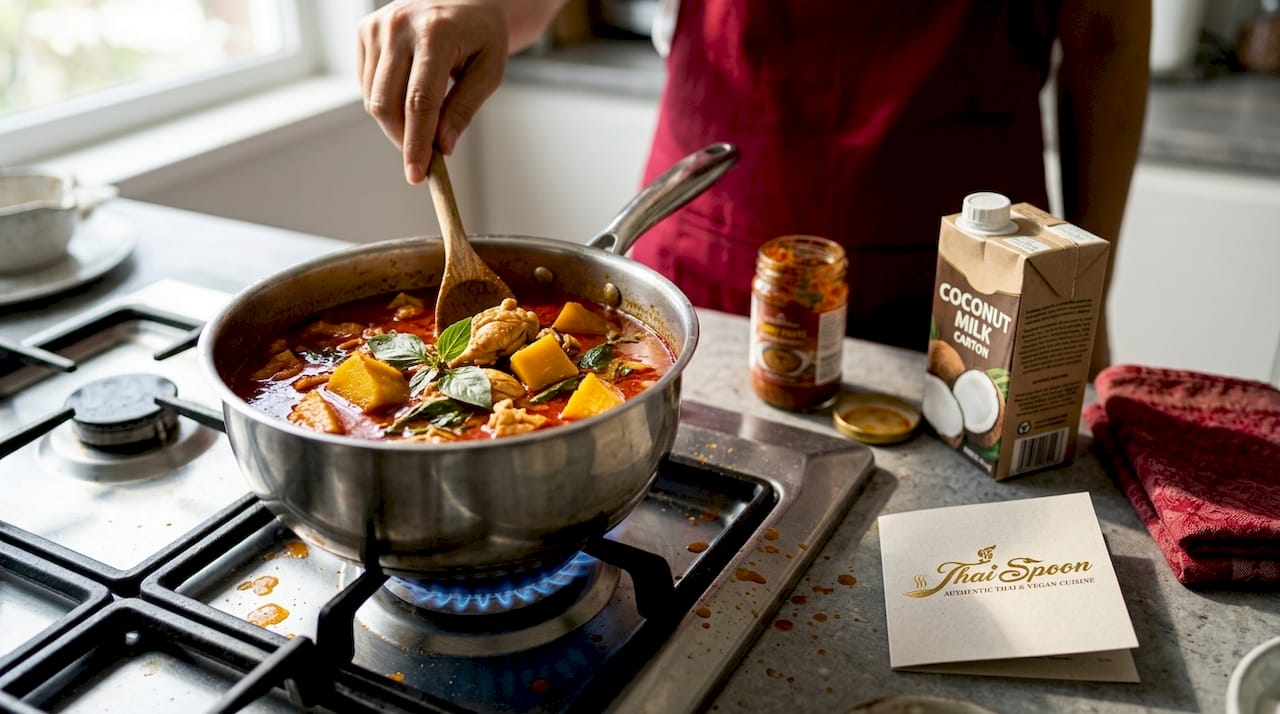
Fry the paste first. Heat oil or thick coconut cream (the solid top layer from a can) in a wok or heavy pan over medium-high heat. Add your curry paste and fry it, stirring constantly, until it’s fragrant and the oil visibly separates from the paste. This takes 2 to 3 minutes and is the most important step. Skipping it leaves raw, bitter flavors in your dish.
Add coconut milk gradually. Pour in about half your coconut milk first and stir to combine. Let it simmer for a minute before adding the rest. This keeps the sauce from breaking (turning greasy and separated).
Add hard vegetables early. Carrots, pumpkin, and potatoes take longer to cook. Add them after the coconut milk and give them 8 to 10 minutes before adding anything else.
Add proteins next. Chicken thighs, beef strips, or shrimp go in once the sauce is simmering. Chicken thighs take about 12 minutes; shrimp cook in 3 to 4 minutes and should go in last.
Add soft vegetables near the end. Zucchini, bell peppers, and green beans only need 3 to 5 minutes. Overcooking them turns them mushy and strips their color.
Balance the flavors before serving. Taste your curry and adjust with fish sauce (salty), sugar (sweet), and lime juice (sour). This is the step most home cooks skip, and it’s the reason restaurant Thai food tastes more layered.
“The secret to great Thai curry isn’t the paste. It’s the frying step that most recipes rush or skip entirely. Get that right, and everything else falls into place.”
Understanding balancing Thai flavors is what makes the final dish sing. Each component, salt from fish sauce, sweetness from sugar, sour from lime, has to pull its weight. For a deeper look at the paste itself, the guide to curry paste breaks down what goes into it and why each ingredient matters.
Pro Tip: If your curry sauce looks broken and greasy, you’ve added coconut milk too fast or used light coconut milk. Switch to full-fat and add it slowly next time. If you’re mid-cook and it’s already broken, lower the heat and stir in a splash of water to bring it back together.
Beyond curry: 5 delicious dishes to make with Thai red curry paste
With the core method down, you’re ready to branch out. Here are five dishes that prove Thai red curry paste works far beyond a single pot of curry.
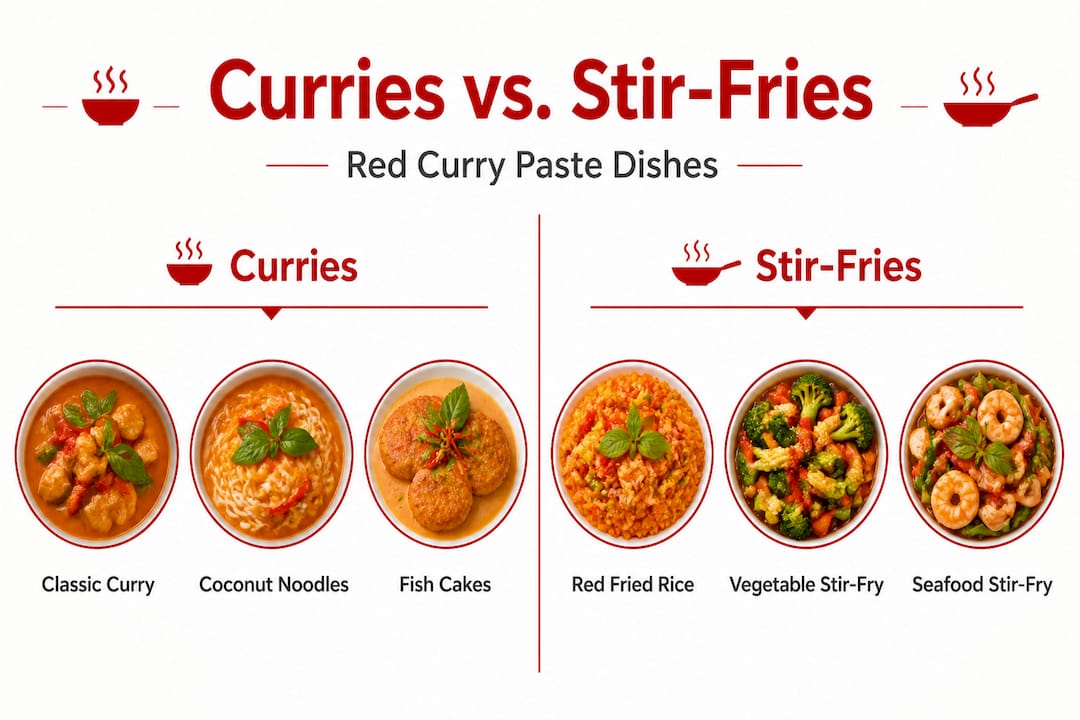
1. Classic Thai red curry
The most popular dish made with Thai red curry paste, and a perfect place to start. Chicken thighs, pumpkin, and green beans in a rich coconut milk sauce is the classic version. Swap chicken for tofu and add bamboo shoots for a vegetarian spin that holds up just as well.
2. Thai fish cakes (Tod Mun Pla)
Thai fish cakes use red curry paste as the main flavoring, mixed with white fish fillets, egg, rice flour, fish sauce, lime juice, and thinly sliced green beans. The paste binds everything together while giving each cake a deep, spicy aroma. Fry them in shallow oil until golden and serve with a sweet chili dipping sauce.
3. Red curry stir-fry
Stir-fries are one of the fastest ways to use up leftover paste. A tablespoon of red curry paste, a splash of fish sauce, and a hot wok are all you need. Sliced beef and green beans, Thai basil tofu, or even a simple shrimp and bell pepper stir-fry all work beautifully. The paste replaces the need for a complicated sauce mix since the flavors are already built in.
4. Coconut curry noodle soup
Noodle soups use red curry paste as a base for creamy, spicy broths. Fry the paste, add chicken broth and coconut milk, then simmer with rice noodles, shredded chicken, lime juice, and fresh herbs. It’s warming, filling, and comes together in under 30 minutes.
5. Red curry fried rice
Use two tablespoons of paste instead of soy sauce for a deeply flavored fried rice. Day-old jasmine rice, egg, peas, and any protein you have on hand works here. The paste adds complexity that regular fried rice just can’t match.
Dish | Main protein | Cook time | Paste amount | Difficulty |
Classic red curry | Chicken, tofu | 30 min | 2 to 3 tbsp | Easy |
Thai fish cakes | White fish | 20 min | 1 to 2 tbsp | Medium |
Stir-fry | Beef, shrimp, tofu | 15 min | 1 tbsp | Easy |
Noodle soup | Chicken, shrimp | 25 min | 2 tbsp | Easy |
Fried rice | Egg, chicken | 15 min | 2 tbsp | Easy |
For more ideas on planning full meals, the Thai dinner ideas page covers solid combinations. If you want to understand how red curry compares to other styles, the breakdown of types of Thai curries is worth reading.
Pro-level troubleshooting and tips for cooking with Thai red curry paste
Even adventurous cooks hit roadblocks. Here’s how to handle the most common issues and get consistently better results.
Vegan and dietary swaps:
Replace shrimp paste or fish sauce with miso or soy sauce for a fully vegan dish. The saltiness and umami are close enough that most people won’t notice in a finished curry.
Use tofu, tempeh, or chickpeas in place of meat-based proteins.
Aroy-D is your safest bet for a store-bought paste that skips animal products entirely.
Controlling heat and spice:
Soaking dried chilies before using softens their burn without sacrificing flavor.
Use milder brands like Aroy-D, or simply use less paste and build from there.
Adding a little more coconut milk and sugar can dial back heat without diluting the overall flavor.
Avoiding mushy fried rice:
Day-old rice is not optional. Freshly cooked rice has too much moisture and turns gluey the moment it hits a hot pan. Spread leftover rice on a tray and refrigerate overnight for the best texture.
Storing leftover paste:
Press a layer of oil over the surface before sealing the container. This cuts off oxygen and keeps the paste fresh in the fridge for up to two weeks. Freeze portions in an ice cube tray for easy use later.
Testing before committing:
When using a new brand, fry a small teaspoon of paste in a drop of oil and taste it plain. You’ll know immediately how strong, salty, or spicy it is, which helps you calibrate how much to use in your full recipe.
Understanding your ingredients’ Thai taste profile before you cook makes every adjustment more instinctive. The more you taste as you go, the better your results will be.
Pro Tip: Always add paste gradually. You can add more, but you can’t take it out. Start with less than the recipe says, taste, and build up.
Why most cooks overcomplicate (or underuse) Thai red curry paste
Here’s an honest take: the debate about homemade versus store-bought paste is mostly noise for home cooks.
Homemade paste is fresher and gives you full control over every element. But it takes over 30 minutes with a mortar and pestle, and sourcing fresh galangal, kaffir lime leaves, and dried Thai chilies in a regular grocery store can be genuinely difficult depending on where you live. That’s a lot of friction before you’ve even started cooking.
The real truth is that most Thai home cooks use store-bought paste. It’s not a shortcut or a compromise; it’s practical. The difference between a great curry made with Mae Ploy and a mediocre one made from scratch comes down to technique, not the paste. A quality brand, properly fried, produces results that most homemade attempts can’t beat unless you’re genuinely skilled with a mortar and already own all the fresh ingredients.
What actually separates good Thai cooking from average Thai cooking is everything after the paste. It’s the frying step, the layering of coconut milk, the timing of proteins and vegetables, and that final balance of fish sauce, sugar, and lime. Those details are where the real work happens. Mastering them will improve your cooking far more than spending an hour grinding a paste from scratch.
Our perspective at Thai Spoon, shaped by years of cooking and serving authentic Thai food in Las Vegas, is this: invest your energy in learning the Thai cooking techniques that apply to every dish rather than getting stuck on ingredient perfection. Buy a good brand, fry it properly, taste constantly, and you’ll get results you’re genuinely proud of.
Ready for authentic Thai flavor? Explore, order, or get inspired
Cooking Thai food at home is deeply satisfying, and getting hands-on with Thai red curry paste is a great place to start building real skill. But there are nights when you want the finished dish without the prep work, or you simply want to taste a benchmark version before you try making it yourself.
[
At Thai Spoon Las Vegas, located about 20 minutes from the Strip in the northwest part of the city, we cook with the same bold flavors and authentic techniques covered in this guide. Our Thai Spoon menu includes curry dishes, stir-fries, and noodle soups that showcase just how much depth Thai red curry paste can bring to a finished dish. We also offer Thai catering services for events where you want restaurant-quality Thai food without the logistics. Whether you’re looking for inspiration or just a great meal, we’re here for both.
Frequently asked questions
Can I make Thai red curry paste from scratch at home?
Yes, and a mortar and pestle yields noticeably better aroma than a blender, though the process takes time and requires sourcing specific fresh Thai ingredients.
What proteins work best with Thai red curry paste recipes?
Chicken thighs, beef, and shrimp are the most popular choices for curries and stir-fries, while tofu works well as a vegan substitute without losing much texture.
How do I control the spice level in dishes with Thai red curry paste?
Use less paste, choose a milder brand like Aroy-D, or soak dried chilies before using them to reduce their intensity without losing flavor.
How should I store leftover red curry paste?
Top the paste with oil and store it sealed in the fridge for up to two weeks, or freeze tablespoon-sized portions for longer use without losing quality.
Is Thai red curry paste vegan?
Most brands contain shrimp paste or fish sauce, but Aroy-D is a vegan option that skips animal products while still delivering solid flavor for curries and stir-fries.
Recommended
Comments