


What Makes Thai Unique: Dishes, Culture, and Flavors
TL;DR:
Authentic Thai cuisine emphasizes flavor interaction, regional specificity, and traditional techniques that reflect cultural rituals.
It features complex spice behaviors, uncommon ingredients, and dishes deeply rooted in local customs, festivals, and art.
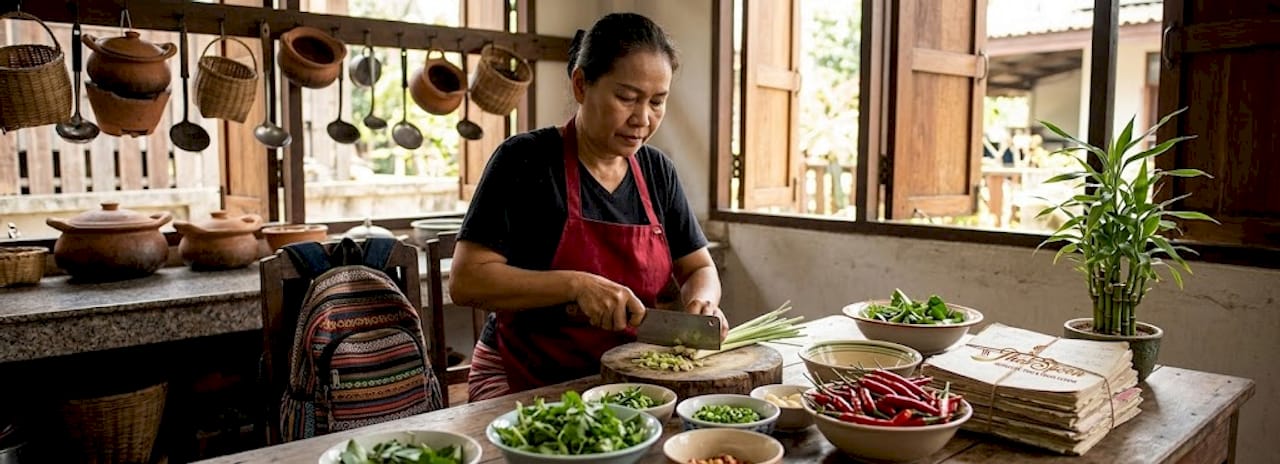
Most people think they know Thai food. Pad Thai, green curry, maybe some spring rolls. But the truth is that what makes Thai unique goes so much deeper than those familiar names on a takeout menu. Thailand has distinct regional identities across the north, northeast, and south, each with its own flavor logic, ingredients, and cultural rituals. If you’ve only scratched the surface, you’ve missed the best parts. This guide exists to change that.
Table of Contents
Key takeaways
Point | Details |
Thai flavor is dynamic | Spice in authentic Thai cuisine moves and shifts rather than simply hitting hard and fading. |
Regional variety is dramatic | Northern Lanna, Isaan, and southern Muslim traditions create entirely different culinary worlds within one country. |
Culture deepens the food | Buddhist rituals, festivals, and traditional arts are woven into the Thai food experience, not separate from it. |
Uncommon ingredients define authenticity | Dishes like Khao Moo Daeng and southern curries use techniques and components rarely replicated outside specialist kitchens. |
Local access matters | You can experience genuine Thai flavors without a plane ticket when you find a restaurant that prioritizes authenticity over shortcuts. |
1. What actually makes Thai cuisine unique
Before you can appreciate the depth, you need a framework. Unique Thai cuisine is not defined by heat level or sweetness alone. The authenticity comes from how the flavors interact, shift, and balance across a single bite and even across the entire meal.
Thai food reflects a balance of sweet, sour, salty, and spicy that functions more like a conversation than a formula. The goal is never dominance of one element. It’s tension and resolution.
What else signals authenticity?
Regional specificity. A dish from Chiang Mai should taste nothing like one from Hat Yai. If everything tastes the same, someone cut corners.
Uncommon Thai ingredients. Think fresh turmeric root, galangal, kaffir lime leaf, shrimp paste, and long green eggplant. These aren’t garnishes. They’re structural.
Cultural resonance. Dishes tied to Buddhist ceremonies, harvest seasons, or local fishing traditions carry meaning that changes how they taste in context.
Technique over shortcuts. Authentic Thai cooking methods like stone-ground curry paste, low-heat coconut milk cooking, and precise layering of aromatics cannot be faked with a jar of pre-made sauce.
Pro Tip: When evaluating a Thai restaurant, order something with a fresh herb base rather than a pre-mixed sauce. If the aromatics are sharp, clean, and layered, the kitchen knows what it’s doing.
2. Khao Moo Daeng: the dish with a secret sauce
Khao Moo Daeng is one of those Thai dishes that sounds simple until you taste the real version. Red roasted pork over rice, topped with a sauce that stops you mid-bite. The sauce itself is guarded, thickened with cornstarch, built from reduced meat juices, and sometimes finished with a touch of liquor.
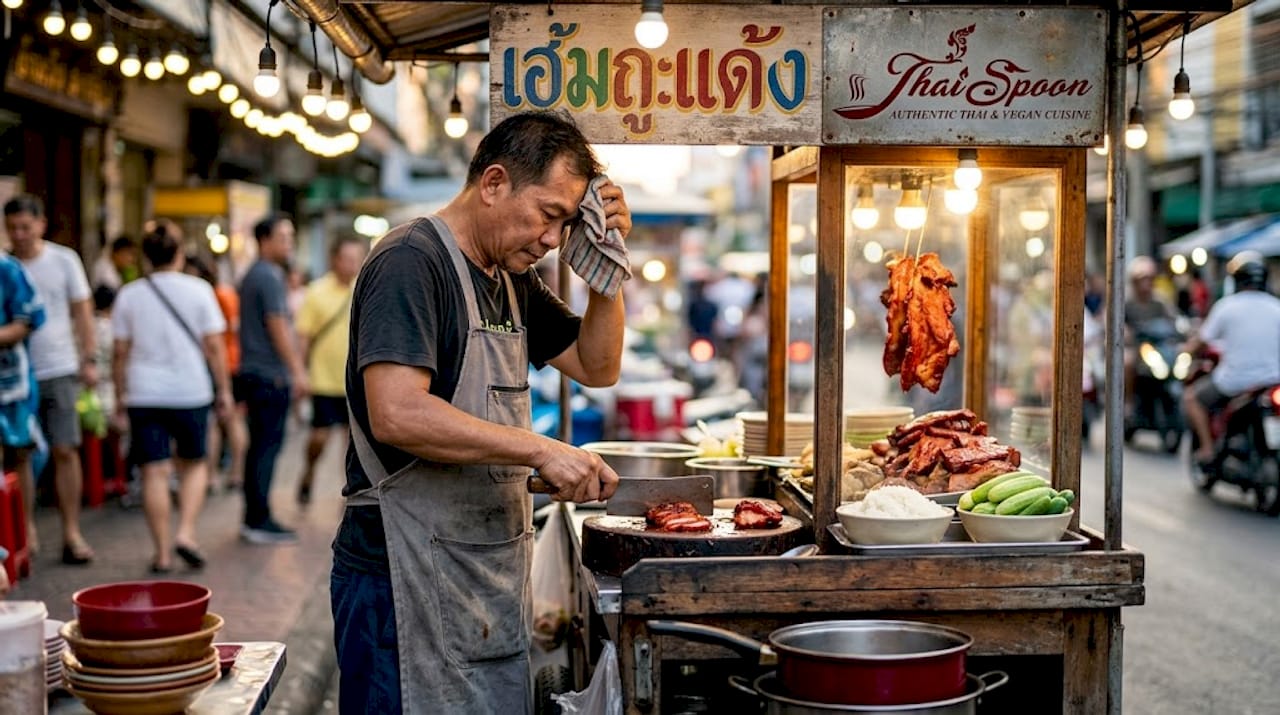
What makes it thai unique is not just the pork. It’s how the sauce works. The depth comes from technique that took generations to perfect. You will not find this at every Thai restaurant. When you do find a version that’s made properly, it will reset your expectations for what a “simple” dish can do.
3. Southern Thai curry: where spice behaves differently
Most people assume spice is just heat that fades. In Southern Thai cuisine, that assumption falls apart entirely. Spice moves and shifts across the palate rather than disappearing. It’s introduced, carried by fat, absorbed by bitterness, and reintroduced at a different register.
That effect is not accidental. Capsaicin binds with fat to release spice gradually, while turmeric stabilizes the flavor base and bitter elements redirect intensity rather than simply cooling it down.
Southern Thai curries are among the most complex in the world because they don’t try to tame the spice. They choreograph it. Dishes like Gaeng Tai Pla (fermented fish kidney curry) and Massaman with its Persian-influenced spice profile are worth seeking out specifically for this reason. These are rare Thai recipes that reward attention.
4. Gaeng Kua Kling: a dry curry unlike anything else
If you want to understand uncommon Thai ingredients in action, Gaeng Kua Kling is your reference point. This dry southern curry is made without coconut milk, which puts it in a class of its own. The paste is stir-fried directly with minced pork or beef until the meat is coated, fragrant, and slightly caramelized.
The spice level is genuinely intense. The flavor is focused and unapologetic. There is no creaminess to moderate the heat. This is Thai cooking methods at their most direct. For adventurous eaters, it’s a revelation.
5. Nam Prik: the fermented condiment world
Thailand has a universe of Nam Prik (chili dipping sauces and pastes) that most outside diners never encounter. Each region has its own version, and each version tells you something specific about local ingredients and traditions.
Nam Prik Kapi from the south uses shrimp paste as its backbone, sharp and funky.
Nam Prik Ong from the north is tomato and pork-based, almost mild by comparison.
Nam Prik Num features roasted green chilies with a smoky, fruity depth.
These are served with raw or blanched vegetables and sticky rice, not as a side note but as the centerpiece. Exploring authentic Thai flavors through Nam Prik is one of the most rewarding things a food explorer can do because the range is enormous and each version reflects local character with total clarity.
6. Miang Kham: the one-bite cultural experience
Miang Kham is the dish that explains Thai hospitality in a single bite. Small betel leaves are filled with toasted coconut, dried shrimp, tiny diced lime, ginger, shallot, chili, and a thick sweet-savory sauce, then folded and eaten whole.
What happens in your mouth is a textbook demonstration of the Thai flavor philosophy. Every element registers separately before combining into something entirely its own. It’s one of the best Thai dishes for first-time explorers because it teaches your palate exactly what Thai food is trying to do.
7. Thai cultural experiences that change how you taste the food
Food doesn’t exist outside of culture. In Thailand, the two are inseparable. Understanding the cultural context transforms even a bowl of noodles into something more meaningful.
Monks collecting alms barefoot in the early morning is one of the most quietly striking things you can witness. It’s not a performance. It’s a living Buddhist tradition that reminds you food here carries spiritual weight. What people offer, how they offer it, and when they offer it all carry layers of meaning.
Wat Arun, Bangkok’s River Temple, is worth visiting not just as a landmark but as an active religious space where the architecture itself is made from Chinese porcelain shards salvaged from trading vessels. That kind of detail, history repurposed into beauty, is very Thai.
And then there are the festivals:
Songkran involves ceremonial water pouring to symbolically wash away bad luck at the Thai New Year.
Loy Krathong sees people floating small lotus-shaped candle offerings on rivers to release negativity and honor the water spirits.
Thai festivals and traditions like these are not tourist attractions. They are expressions of values that show up directly in the food: gratitude, balance, impermanence, and beauty in small things.
8. Traditional Thai art forms that show up at the table
Traditional Thai art and food overlap more than you’d expect. Fruit carving is practiced at festivals and ceremonies, turning watermelons and papayas into architectural sculptures. Thai silk weaving, globally recognized for its quality and intricacy, shows up in table settings and ceremonial contexts that frame how food is presented and experienced.
Even plating philosophy in traditional Thai cooking reflects a visual sensibility rooted in Buddhist aesthetics. Balance, symmetry, and the use of negative space matter. A properly plated Thai meal is not just food. It’s a statement about harmony.
“Traditional Thai art is not separate from the kitchen. It lives in every carved garnish, every silk cloth under a serving dish, every symmetrical arrangement on the table.”
9. How to pick your own unique Thai culinary adventure
Not everyone needs to start with fermented fish kidney curry. Here’s how to sequence your exploration based on where you are right now.
Casual foodie starting point. Begin with dishes that showcase flavor balance without extreme intensity. Miang Kham, Khao Moo Daeng, and regional Nam Priks give you complexity without demanding your full heat tolerance.
Cultural explorer track. Pair your food exploration with context. Read about the region your dish comes from. Watch how street food markets function as social spaces. Explore Thai street food culture before you order to understand what you’re eating and why it matters.
Adventurous eater track. Go straight for the regional extremes. Southern dry curries, fermented pastes, and dishes built around uncommon Thai ingredients like fish maw, banana blossom, or fresh turmeric root. The flavor logic is different. Commit to it without expecting it to taste like what you know.
Festival and tradition track. Time a visit or a food experience around a cultural moment. Thai food tastes different when it’s connected to a reason for eating it.
Pro Tip: When trying a new Thai dish, resist the urge to compare it to what you already know. Thai flavor logic is not a variation of any other cuisine. Treat each dish as its own system.
10. Comparing unique Thai dishes and experiences
Dish or experience | Flavor complexity | Ingredient rarity | Cultural depth | Best for |
Khao Moo Daeng | Medium | Low to medium | High | First-time explorers |
Gaeng Kua Kling | Very high | High | High | Heat-seeking foodies |
Miang Kham | High | Medium | Very high | Anyone new to Thai flavor logic |
Nam Prik Kapi | High | Medium | High | Flavor-forward explorers |
Songkran experience | N/A | N/A | Very high | Cultural immersion seekers |
Loy Krathong experience | N/A | N/A | Very high | Spiritual and sensory travelers |
The pattern here is clear. High cultural depth almost always correlates with high flavor interest. These are not coincidences. The dishes and experiences that carry the most cultural weight also tend to demand the most from your palate.
My take on what actually makes Thai food worth chasing
I’ve eaten Thai food in a lot of contexts, from busy night markets to elegant restaurant tasting menus, and the one thing I keep coming back to is this: Thai food rewards attention in a way that very few cuisines do.
Most food cultures ask you to enjoy flavors. Thai cuisine asks you to track them. I’ve noticed that people who find Thai food “just spicy” are usually eating it too fast or skipping the context entirely. The moment you slow down and pay attention to how the heat arrives, shifts, and resolves, the whole experience opens up.
The biggest misconception I encounter is that Thai food is simple or predictable. It is neither. At elite Thai restaurants, culinary complexity is built by separating ingredients to let distinct textures and salinities register independently. That is the opposite of simple. It’s one of the most intentional cooking philosophies in the world.
The other thing I’d push back on is the idea that authenticity requires travel. A kitchen that uses real aromatics, stone-ground paste, and proper technique can deliver a genuinely Thai unique experience regardless of geography. What it requires is a cook who cares, and a diner who shows up curious.
— Thai
Experience authentic Thai flavors right here in Las Vegas
[
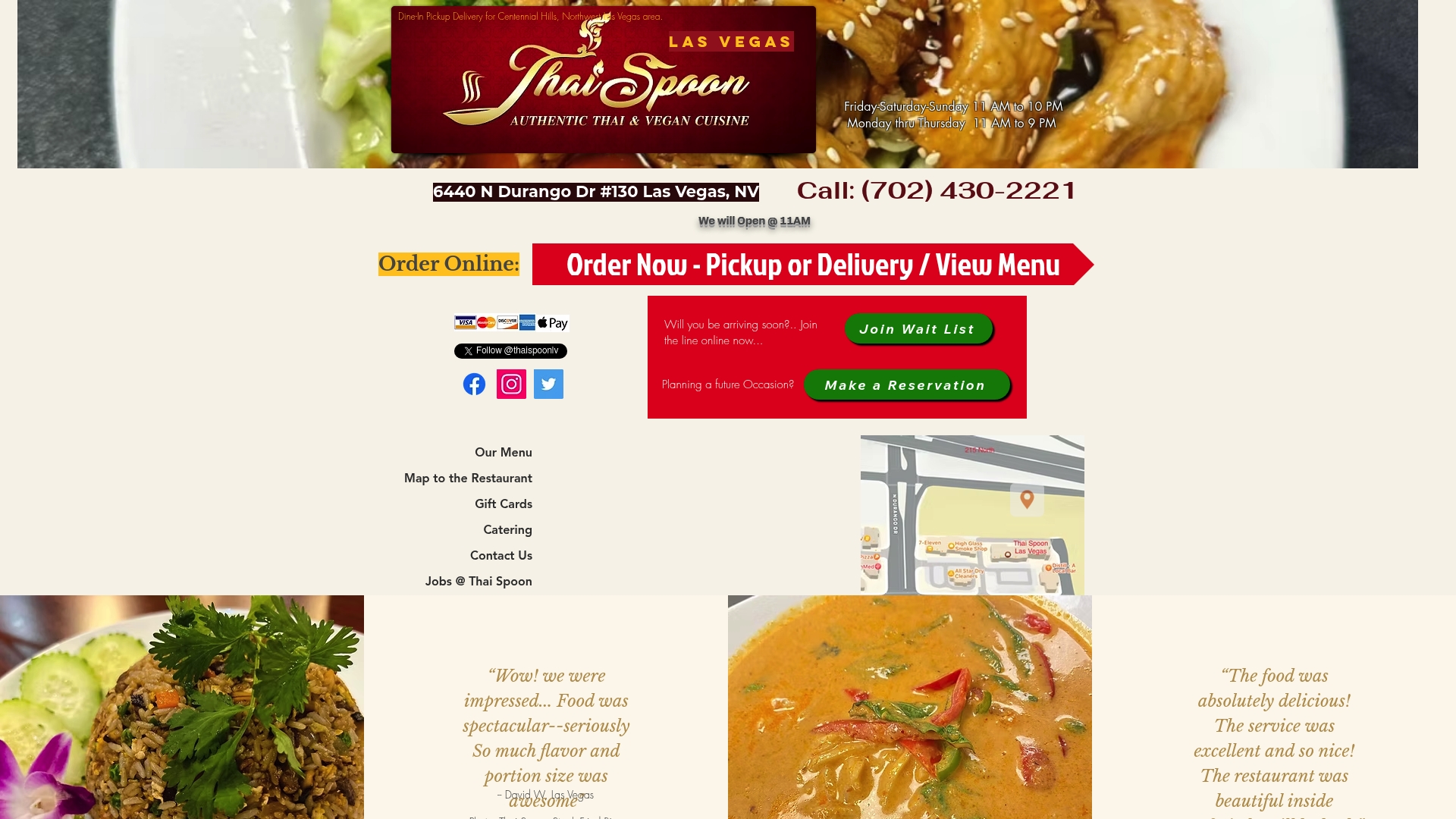
If this has made you hungry for something beyond the usual takeout order, Thaispoonlasvegas is exactly where to start. Located in northwest Las Vegas, about 20 minutes from the Strip, the restaurant brings genuine Thai cooking methods and authentic flavor profiles to every dish, from classics like Pad Thai and Yellow Curry to options that go further into the regional depth covered here. You can explore the full menu to find dishes that match where you are in your Thai food journey, whether that’s a first step or a deep dive. For events, gatherings, or group dinners where you want to share something genuinely special, the Thai catering services at Thaispoonlasvegas bring that same authentic experience to your table. It’s one of the most satisfying ways to introduce Thai food to people who think they already know it.
FAQ
What makes Thai food different from other Asian cuisines?
Thai food is built around a dynamic balance of sweet, sour, salty, and spicy flavors that interact rather than layer. Unlike many other Asian cuisines, Thai cooking uses herbs and aromatics as structural ingredients rather than as accent flavors.
What are some uncommon Thai ingredients to look for?
Fresh turmeric root, galangal, kaffir lime leaf, shrimp paste, and long green eggplant are hallmarks of authentic regional Thai cooking. These ingredients appear in dishes across southern and northern Thailand and are difficult to replicate with substitutes.
What is the most culturally significant Thai festival tied to food?
Songkran and Loy Krathong are the two festivals with the deepest cultural resonance in Thailand. Both involve symbolic rituals related to renewal and gratitude that directly reflect values present in Thai food culture.
How do I find truly authentic Thai cuisine outside of Thailand?
Look for restaurants that make curry paste from scratch, use fresh aromatics, and offer regional dishes beyond the standard tourist menu. A kitchen committed to authentic versus fusion distinctions is your clearest signal of genuine intent.
Why is Southern Thai food considered so unique?
Southern Thai cuisine manages spice through fat and bitterness rather than reducing it, creating a dynamic flavor experience that shifts across the palate over time. This approach makes it one of the most technically sophisticated regional food traditions in the world.
Recommended
Comments