


Tom Yum sauce: Flavor, ingredients, and uses explained
TL;DR:
Tom Yum sauce is a concentrated flavor base with bold herbs and spices for Thai dishes.
Traditional preparation using mortar and pestle enhances aroma and texture, differing from modern methods.
It is versatile, used beyond soup in noodles, fried rice, marinades, and fusion dishes.
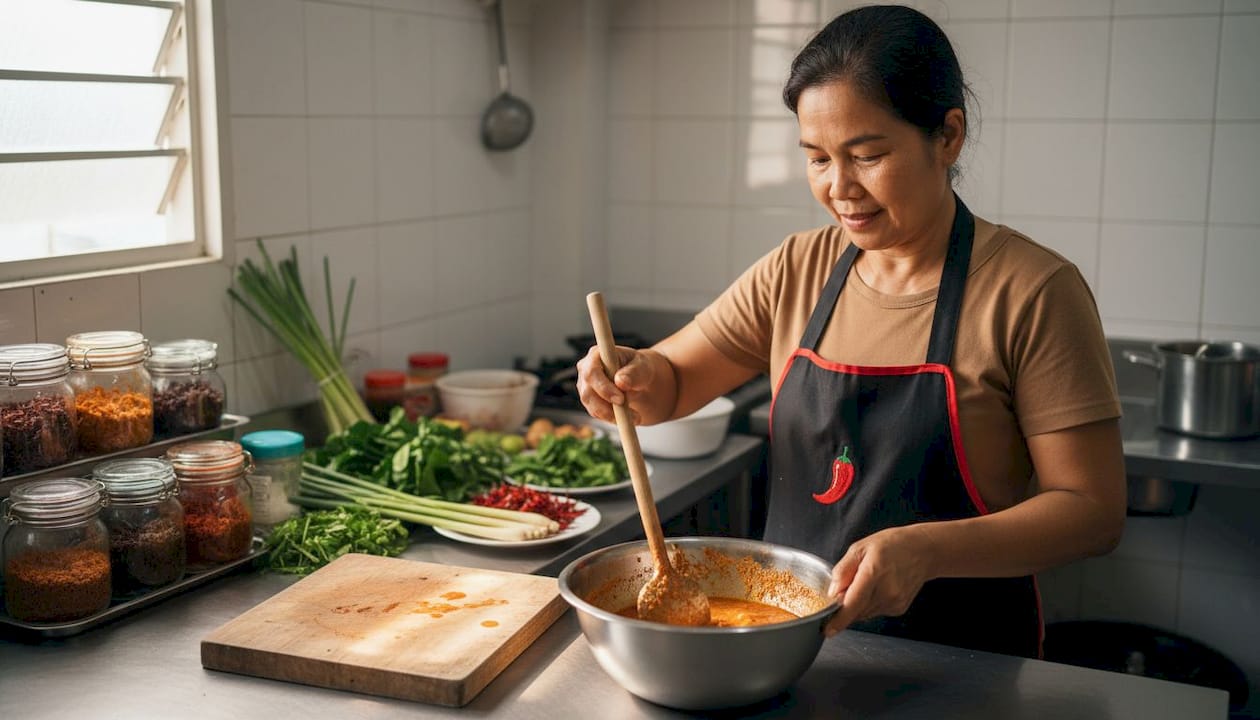
Most people hear “Tom Yum” and picture a steaming bowl of soup. That’s fair, but it sells this sauce seriously short. Tom Yum sauce, also called Tom Yum paste, is the flavor engine behind some of the boldest dishes in Thai cooking. It packs lemongrass, galangal, chilies, and shrimp paste into a concentrated punch that can transform fried rice, noodles, marinades, and more. If you’ve been eating Thai food in Las Vegas and haven’t thought much about what’s giving those dishes their unmistakable zing, this guide is for you. We’re breaking down everything: what it is, how it’s made, and how to use it like a pro.
Table of Contents
Key Takeaways
Point | Details |
Tom Yum sauce basics | Tom Yum sauce is a Thai flavor powerhouse made with aromatic herbs, chilies, and umami-rich ingredients. |
Versatility | It’s not just for soup; use Tom Yum sauce for rice, noodles, marinades, and more. |
Preparation matters | Traditional mortar-and-pestle methods unlock the most aroma and depth for authentic results. |
Local dining tips | Look for menus featuring house-made Tom Yum or ask your Las Vegas Thai chef about their preparation. |
Homemade or store-bought | Homemade offers fresher flavor, but quality brands are a convenient weeknight option. |
What is Tom Yum sauce?
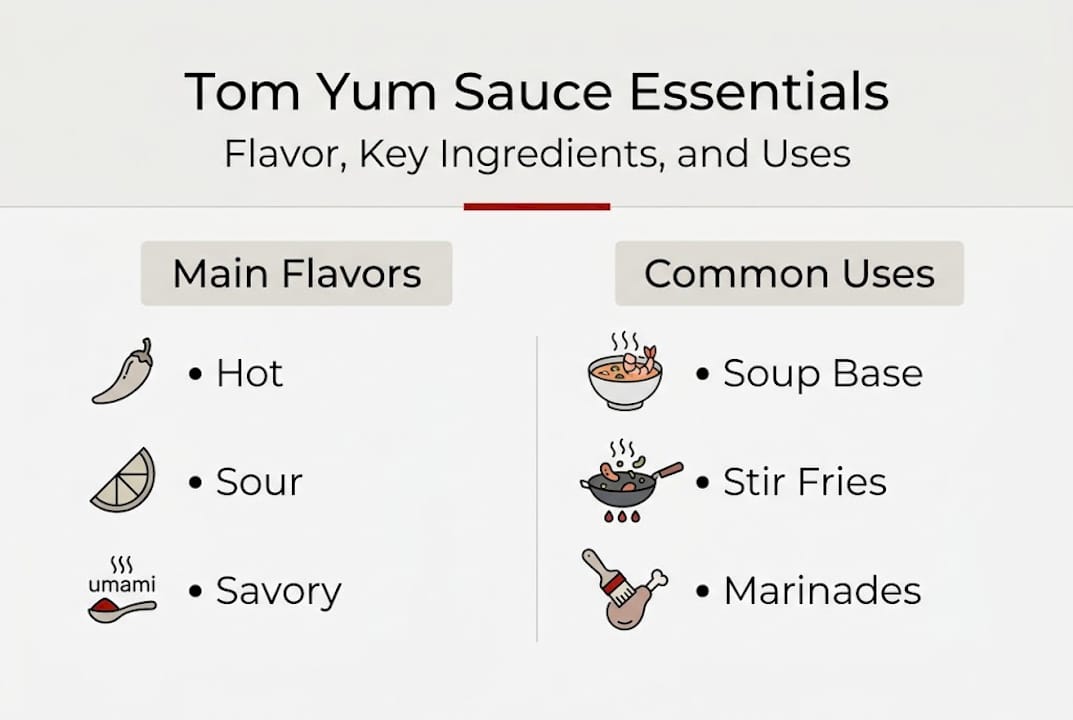
Tom Yum sauce is not just a soup seasoning. It’s a concentrated Thai flavor base, packed with herbs, spices, and umami-rich ingredients that anchor some of the most iconic dishes in Thai cuisine. Think of it as a flavor shortcut with serious depth.
The name itself gives clues. “Tom” means boiling or simmering, and “Yum” refers to the Thai style of mixing spicy, sour, and savory together. The sauce captures all three in every spoonful.
Core ingredients in Tom Yum sauce:
Lemongrass — bright, citrusy backbone
Galangal — earthy, pine-like bite (not ginger)
Kaffir lime leaves — floral citrus aroma
Dried chilies — heat and color
Shallots and garlic — savory base
Shrimp paste — deep, fermented umami
Fish sauce — salt and funk
Tamarind or lime juice — sharp sourness
Palm sugar — subtle sweetness to balance
The result is a sauce with a signature flavor profile: hot, sour, and savory all at once, with layers that unfold as you eat. You can explore making Tom Yum soup to see how this base gets used in its most classic form, or start with understanding Tom Yum soup if you’re newer to Thai cuisine.
Flavor element | Key ingredient | Role in the sauce |
Heat | Dried chilies | Spice and color |
Sour | Tamarind, lime | Brightness and tang |
Savory | Shrimp paste, fish sauce | Umami depth |
Aromatic | Lemongrass, galangal | Fragrance and complexity |
For a closer look at authentic Tom Yum paste construction, the ingredient ratios matter more than most people realize. Las Vegas Thai menus increasingly feature this sauce across multiple dishes, not just soup.
How Tom Yum sauce is made: Traditional vs. modern methods
Knowing what’s in Tom Yum sauce is one thing. Knowing how it’s made changes how you taste it. The method has a real impact on the final flavor, and the difference between traditional and modern preparation is bigger than most home cooks expect.
The traditional mortar-and-pestle method produces maximum aroma and texture, according to Food Faith Fitness. Grinding releases essential oils from the lemongrass and galangal in a way that blending simply doesn’t replicate.
How to make Tom Yum sauce step by step:
Dry toast the dried chilies and shallots briefly over low heat
Pound the hard aromatics first: galangal, lemongrass, kaffir lime zest
Add shallots, garlic, and chilies and continue pounding
Mix in shrimp paste and pound until a rough paste forms
Fry the paste gently in oil to bloom the aromatics
Finish with fish sauce, tamarind, and palm sugar to taste
Traditional vs. modern comparison:
Method | Texture | Flavor intensity | Time |
Mortar and pestle | Coarse, layered | High, complex | 20 to 30 minutes |
Food processor | Smooth, uniform | Good but flatter | 5 to 10 minutes |
Pro Tip: If you use a food processor, rough chop the aromatics first and pulse in short bursts. This prevents over-processing and preserves some of the coarse texture that makes homemade paste special.
Homemade almost always beats store-bought on freshness and flavor. Store-bought versions often include preservatives and lack the volatile aromatics that make a fresh paste so alive. Learning about other Thai sauces and essential Thai ingredients gives you a solid foundation for understanding why each component in Tom Yum paste earns its place.
How Tom Yum sauce is used: Beyond soup
Once you have Tom Yum sauce in your kitchen, you’ll start seeing it everywhere. Its bold, layered flavor makes it one of the most versatile condiments in Thai cooking, and it goes well beyond the classic shrimp soup.

Tom Yum paste elevates noodles, fried rice, stir-fries, marinades, and more, making it a genuine multi-purpose sauce. The key is knowing how much to use and when to add it.
Creative ways to use Tom Yum sauce:
Tom Yum fried rice — 2 to 4 tablespoons stirred in with eggs and vegetables
Stir-fry sauce — mix with a splash of fish sauce and lime for instant flavor
Chicken wing marinade — coat wings 2 hours before grilling
Dipping sauce — thin with lime juice and a touch of honey
Pasta sauce — yes, seriously. A small spoonful in a cream sauce adds unexpected depth
Soup base — 1 to 2 tablespoons per pot, then adjust with broth and lime
For Tom Yum noodles, the paste gets tossed directly with noodles and a bit of the cooking water, creating a clingy, intensely flavored coating. You can also try soupless Tom Yum noodles for a dry version that’s become increasingly popular.
Pro Tip: Always taste and adjust after adding Tom Yum paste. The heat and sourness vary between batches and brands. Start with less, then build up. A squeeze of fresh lime at the end brightens everything.
Local Las Vegas chefs have been experimenting with Tom Yum paste in fusion dishes, from tacos to flatbreads, proving that this sauce has no borders.
Tom Yum sauce variations, secrets, and expert tips
Not all Tom Yum is the same. Once you understand the two main styles, you’ll never look at a Thai menu the same way again.
Clear (Nam Sai) vs. creamy (Nam Khon):
Nam Sai is the classic clear broth version: bright, sharp, and intensely aromatic
Nam Khon adds evaporated milk or coconut milk for a richer, milder result
Creamy versions also use Nam Prik Pao, a Thai roasted chili paste that adds depth to creamy Tom Yum variations
Expert tips and common mistakes:
Never swap galangal for ginger. The flavor difference is significant: galangal is piney and citrusy while ginger is warm and spicy
For vegetarian Tom Yum, use mushroom broth and skip the shrimp paste and fish sauce entirely
Store homemade paste in the fridge for up to 2 weeks or freeze in ice cube trays for up to 3 months
Top store-bought brands when you’re in a pinch: Dragonfly and Maesri are widely respected
Tom Yum paste is not interchangeable with red curry paste. Each has a completely distinct flavor profile. Red curry is rich and earthy; Tom Yum is tangy and herbaceous. For a deeper breakdown, the curry paste guide explains the differences clearly.
“Paste is convenient for weeknights, but nothing beats pounding fresh herbs for a real punch.” This is the kind of wisdom that separates good Thai cooking from great Thai cooking.
Tom Yum in Las Vegas: Savoring authentic flavors locally
Las Vegas has a surprisingly strong Thai food scene, and Tom Yum is at the center of it. If you know what to look for, you can tell the difference between a restaurant using house-made paste and one opening a jar.
Las Vegas Thai chefs feature both traditional and new Tom Yum interpretations on menus, making the city a genuinely exciting place to explore this sauce.
What to look for at a great Las Vegas Thai restaurant:
Menu mentions of house-made paste or fresh aromatics
Both clear and creamy Tom Yum options available
Tom Yum fried rice or noodles alongside the soup
Staff who can tell you whether the paste is made in-house
Fresh lemongrass and galangal visible in the dish
Asking your server about the paste is not a strange question. It’s actually a great conversation starter and a sign that you appreciate what goes into the food. Most chefs love talking about it.
For diners who want to explore heat levels and spice variety, checking out Las Vegas spicy Thai dishes gives a useful overview of what’s available. Understanding Thai soup base flavors also helps you order more confidently and know what you’re tasting.
The northwest Las Vegas area, away from the Strip, tends to have more neighborhood Thai spots where authentic technique is prioritized over tourist-friendly shortcuts. That’s where you find the real thing.
Why most people miss the real magic of Tom Yum sauce
Here’s something most Thai food fans don’t realize: even good restaurants sometimes take shortcuts with Tom Yum paste. It’s not laziness. It’s economics. Making paste from scratch takes time, skilled hands, and fresh ingredients that need daily restocking. A quality jarred paste is a reasonable compromise on a busy Tuesday night.
But here’s what gets lost. When you learn about Tom Yum soup made with freshly pounded paste, you taste the difference immediately. The aroma hits you before the bowl reaches the table. The lemongrass is bright rather than muted. The galangal has a sharp, almost medicinal edge that fades quickly once it’s been processed and stored.
The magic of Tom Yum sauce isn’t just the ingredients. It’s the texture of a coarsely pounded paste releasing oils slowly into hot broth. It’s the way fresh kaffir lime leaves smell when they hit the pan. These are sensory details that no jar can fully replicate.
We encourage you to ask next time you order. Notice the aroma. Compare a clear Tom Yum to a creamy one. The more you pay attention, the more you taste. That’s the real reward of understanding this sauce.
Taste Tom Yum and bold Thai flavors in Las Vegas
Ready to taste the difference that real Tom Yum paste makes? At Thai Spoon Las Vegas, we take our sauces seriously. Our menu features authentic Thai dishes built on the kind of bold, layered flavors this article is all about, from classic Tom Yum soup to Tom Yum fried rice and noodles.
Planning a gathering or event? Our Thai Spoon Las Vegas catering options bring authentic Thai flavors to any occasion, with dishes your guests will actually remember. Browse our full Thai menu to explore everything from soups and noodles to curries and stir-fries, all available for dine-in, pickup, or delivery. Come taste what Tom Yum sauce is really capable of.
Frequently asked questions
Is Tom Yum sauce the same as Tom Yum soup?
No. Tom Yum sauce is a concentrated flavor base used to make Tom Yum soup, but it works equally well in fried rice, noodles, marinades, and more.
Can I substitute ginger for galangal in Tom Yum sauce?
No. Galangal is not interchangeable with ginger because it has a distinct citrusy, pine-like flavor that defines authentic Tom Yum taste.
How can I make Tom Yum sauce vegetarian?
Vegetarian Tom Yum paste swaps mushroom broth for seafood stock and omits shrimp paste and fish sauce entirely, keeping the aromatic base intact.
How long does homemade Tom Yum sauce keep?
Tom Yum paste stores for up to 2 weeks in the refrigerator or up to 3 months in the freezer when kept in airtight containers or ice cube trays.
Is Tom Yum paste the same as red curry paste?
No. Tom Yum paste is not interchangeable with red curry paste because Tom Yum is tangy and herb-forward while red curry is rich, warm, and earthy.
Recommended
Comments